
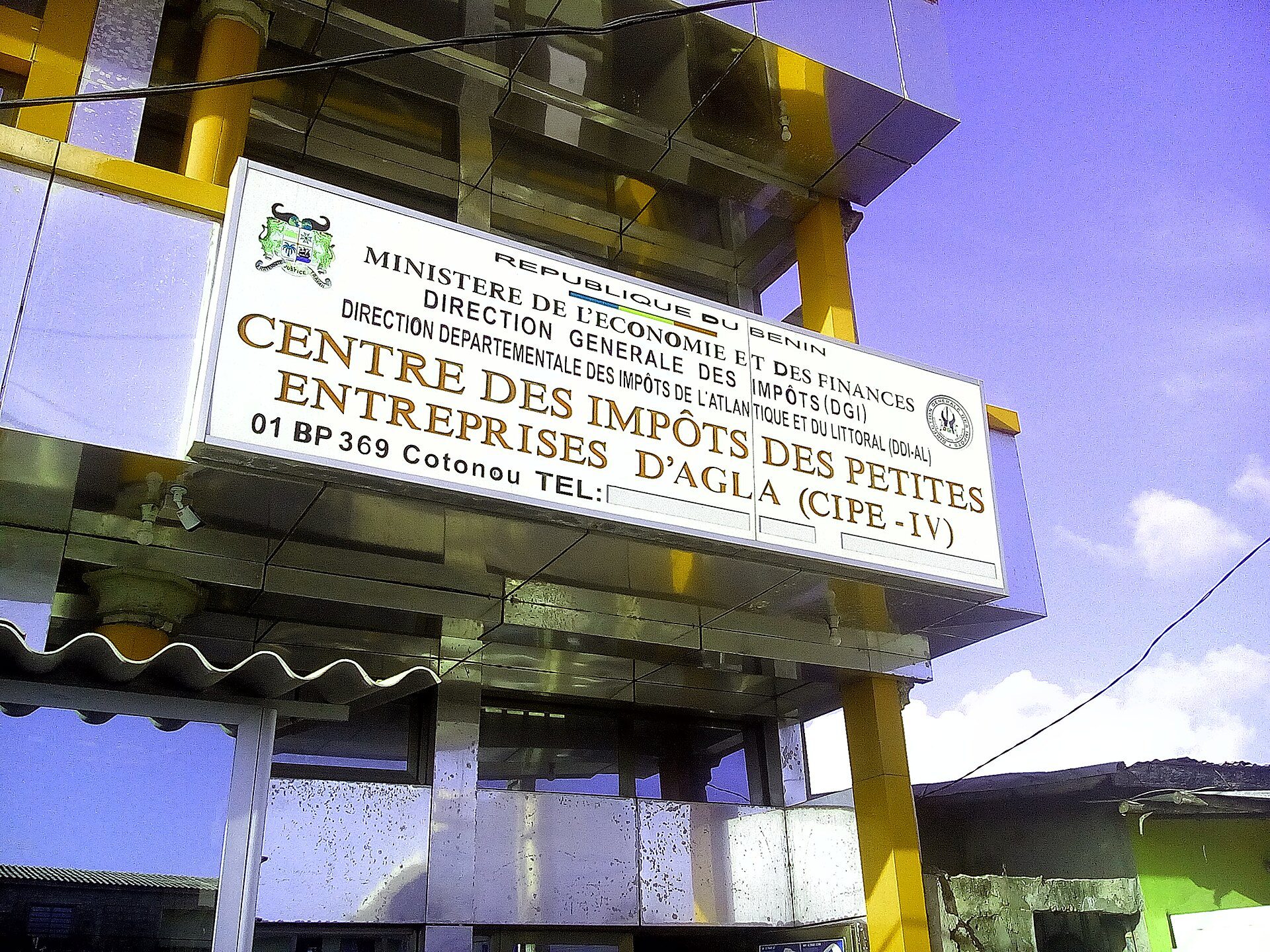

Benin is extending a tax platform, originally designed for large companies, to its smallest taxpayers. Whether this makes the tax system more inclusive is still an open question, and one that our research with the Direction Générale des Impôts will address.
Extending digital tax services from large to small taxpayers
Across Africa, tax administrations are moving their services online. Most started with large taxpayers, who generate the greatest share of revenue and usually have accountants and reliable internet access. Extending these services to micro and small businesses is more challenging. These businesses are far more numerous and often far less equipped than large firms, yet administrations are now asking them to use the same platforms.
Recent evidence on electronic tax services shows that these tools can, under certain conditions, improve compliance and revenue collection. Online filing and payment may reduce the time and cost of complying, limit face-to-face interactions with tax officials, and give administrations better data. In Burkina Faso, electronic services are associated with higher tax payments among small and medium firms. In Senegal, mandatory e-filing sharply improved the quality of administrative data, which can strengthen the administration’s capacity to monitor taxpayers.
However, these gains may not materialise for the smallest taxpayers. In Eswatini, only about 40% of taxpayers registered on the e-Tax platform after it became mandatory, mostly large firms. Yet small taxpayers who registered saw the largest improvements in filing and payment. The difficulty may therefore lie in getting onto the platform. A platform built around the needs of large firms may be costly to use for a shopkeeper with a basic phone, no email account and, sometimes, limited formal education. Rather than reducing compliance costs, the platform may simply be shifting those burdens onto the people who help taxpayers use it. Online tax services also promise to reduce the workload of tax officials. Yet a complex platform, poorly adapted to small taxpayers, can instead increase it. The question is therefore not only whether digital tax services work, but for whom, and under what conditions they benefit small taxpayers and the tax offices that manage them.
Benin’s e-tax rollout
Benin’s Directorate General of Taxation (Direction Générale des Impôts, DGI) has digitalised tax procedures rapidly over the past decade. According to the DGI’s 2025 activity report, gross tax revenue rose from FCFA 381 billion in 2016 to FCFA 1,348 billion in 2025, and electronic payments now exceed 96% for most taxes, a figure driven largely by medium and large firms.
The current online platform, SIGIBé (Système intégré de gestion des impôts du Bénin), replaced an earlier software package, SIGTAS, launched in 2018 with Canadian support. According to the DGI, the switch was driven mainly by a desire for greater control over the technology. SIGIBé is financed from the national budget, and the administration owns its source code, which reduces its dependence on an external provider.
SIGIBé was first rolled out for large and medium taxpayers in 2022, before being extended to small businesses in 2024. Firms with an annual turnover of up to FCFA 50 million, micro-enterprises up to FCFA 20 million and small enterprises above that threshold, are handled by dedicated tax offices, the Centres des Impôts des Petites Entreprises (CIPEs). They pay the taxe professionnelle synthétique, a single tax that replaces income tax, the patente and the licence. The CIPEs also collect property tax on behalf of municipalities.
The four CIPEs of Cotonou moved online in May 2024 as a pilot. Around twenty additional centres are moving online between June and December 2026, with the schedule including centres in Parakou, Comè and Lokossa in September and October. The DGI aims to bring all centres onto the platform by the end of 2026.
To encourage uptake, the launch in Cotonou was accompanied by an intensive information campaign. Taxpayers were invited to the DGI headquarters for explanations, and the platform was presented in radio programmes and debates. Officials told us this helped a great deal.
What we observed in Cotonou
During a scoping mission in Cotonou in October 2026, we met the DGI teams in charge of the platform and visited one of the small business tax centres in the city. Five features stood out.
1. The e-tax platform is the same for all firms, regardless of size and capacity.
Small businesses follow the same registration rules as large companies. Only the procedure for individuals, mostly property owners, was simplified. This is consistent with the DGI’s objective of a single integrated system, but it means that the smallest firms use a tool designed for larger businesses.
2. Digital identity is linked to tax registration.
Registering for a tax identification number (identifiant fiscal unique, IFU) now requires the national personal identification number (NPI), which the system verifies directly with the national identification agency (ANIP). This is a concrete example of interoperability between tax and identity systems, as promoted by the digital public infrastructure (DPI) agenda.
3. Access remains a barrier for many small taxpayers.
Each online operation is confirmed with a code sent by email. But many small taxpayers do not have an email account on their phone, and others use one that belongs to a relative. Officials told us that older and less literate taxpayers often come to the tax centre accompanied by their children. These taxpayers then depend on someone else to handle their tax obligations, codes and personal information.
Mobile money is the most common way to pay online, with a fee of 1% capped at FCFA 1,000. For small taxpayers, this fee may or may not outweigh the time and transport saved by not going to the tax centre. For property tax, staff reported that some taxpayers pay online without receiving proof of payment. Disputes cannot yet be handled online either, so taxpayers who contest a penalty still must travel to the DGI headquarters.
4. Tax officials absorb much of this friction, which adds to their workload.
Each centre now has a help desk, staffed by agents who used to key paper forms into the system. Staff create email addresses for taxpayers who do not have one, help them register and file declarations, and reset forgotten passwords. When a taxpayer cannot access the mailbox the code is sent to, the centre can escalate the case to the departmental support service. This assistance keeps the smallest taxpayers in the system, but it also draws tax officials into tasks that are not part of their role. In practice, part of the work the platform was meant to remove has moved to the help desk.
How long these arrangements can last is an open question. Sending codes by SMS would remove one barrier, but it costs more, which is why the DGI chose email. Help desks are useful during the transition, but they may become a permanent cost if the platform remains difficult to use for a large share of small taxpayers. Officials in the centre we visited reported that their workload has fallen overall, because they no longer key in paper forms and the information they need for audits is now in one place. Whether this holds as the platform reaches centres outside Cotonou, with fewer staff and less connected taxpayers, remains to be seen.
5. Change is visible at the counter.
Before 2024, taxpayers filled in paper forms that officials then keyed into the system, leaving taxpayers with no access to their own records. With the online platform, they can now create their own account, file and pay. In the centre we visited, staff estimated that fewer than half of taxpayers still pay at the cash desk, mostly for property tax and close to the deadline. For businesses, online payment is presented as the rule, although cash desks remain open.
The questions our research on digital inclusion will answer
Over the coming months, the ICTD and the DGI will examine five questions.
- Does moving online change the probability and timeliness of tax payments among small businesses?
- Do compliance costs fall, or do they shift to children, accountants and help desks?
- Which taxpayers adopt the platform, and which continue to pay in cash or fall behind?
- How well does the platform meet the safeguards set out in the UN Universal DPI Safeguards Framework, including non-exclusion, access to redress and data protection?
- Does the platform reduce the workload of tax officials, or move it to help desks, and which forms of support can be sustained as the rollout reaches smaller centres?
The gradual rollout gives us a useful opportunity. Some centres opened in 2024, others in 2026, and some have not opened yet. Using the DGI’s administrative data, we can therefore compare taxpayers exposed to the platform with similar taxpayers who are not. In December, interviews and focus groups with small taxpayers and tax officials will help us understand the mechanisms behind the numbers. They will also document how help desks work, who relies on them, and what they cost the centres. Together, these findings will help us understand whether a single platform can serve taxpayers with very different needs, and what support is needed to make that possible.


