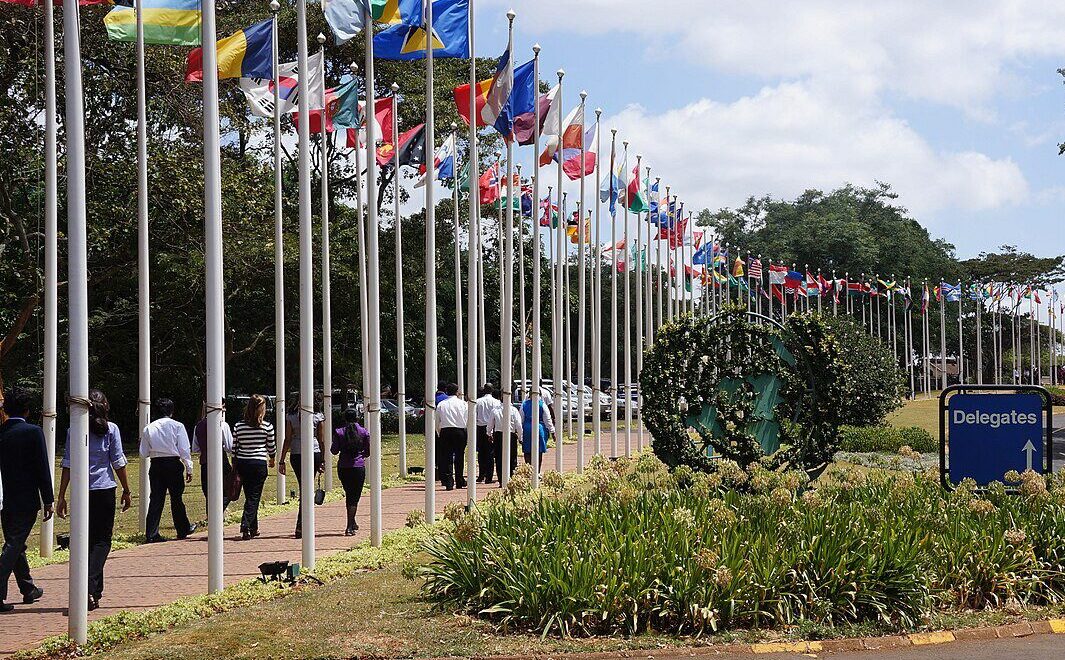


With delegates descending next week on Nairobi for the sixth round of negotiations on the UN Framework convention and its early protocols, the legal text is starting to take shape, though some major disagreements remain unresolved.
The convention’s fundamental objective is simple: to make international tax cooperation better.
As the draft convention sets out in its objectives article, improvements are sought along two dimensions: the content of international tax standards, and the governance structures through which those standards are set. We have deliberately used the vague terms “better” and “improvements” because, as soon as states start to try to define the ways in which cooperation should be improved, they run into disagreement. That is to say, four years since the UN member states first decided to start work on a possible convention, they have not reached a consensus as to its purpose.
Ambiguities riddle the UNTC’s draft text
Earlier this month, ICTD and the Oxford Centre of Business Taxation convened a hybrid workshop bringing together researchers from around the world who work on the Convention.
As several of the papers prepared for this illustrated (see summary here), the draft text of the convention is riddled with ambiguities, which will need clarification as negotiations progress.
These include:
- how the convention will be governed;
- how it will relate to existing legal agreements and standard-setting bodies in the tax, trade, investment and other policy domains;
- the underlying principles guiding the distribution of taxing rights;
- and the definitions of terms that have been politically contentious in the past, such as “harmful tax practices” and “illicit financial flows.”
Ambiguities in drafting may reflect compromises where there is a lack of consensus among negotiators on the problem each provision is meant to solve. Compromise wording is as much a political choice as precise wording that takes a side in a dispute. That political choice should be made consciously and considerately.
At this stage in negotiations, the text should help negotiators to surface disagreements rather than mask them, so that political choices can be made openly in the next negotiation rounds.
Where the intent of a provision is already clear, ambiguity may simply reflect the early stage of drafting, which requires technical strengthening. The quality and precision of drafting is a large determinant of the currency of a legal document, and many of the researchers that we brought together in Oxford sought to scrutinise the text with the aim of strengthening it.
Core questions to consider when reading UNTC draft documents
With that in mind, we pose here several questions that emerged repeatedly during our discussions. They are not in themselves new, but it is worth asking them systematically when reading documents and observing deliberations.
1. How should the convention, its protocols, and their individual provisions interact with existing instruments? Should they compete with them, override them, amend them or defer to them?
2. Which of the principles underlying existing instruments should be honoured and carried through into the Convention?
As we have previously argued, tax negotiators are a social community with its own shared beliefs, norms and language. The convention negotiations could – we would argue should – disrupt this. That means questioning fundamentals. For example, a core norm of existing international tax instruments such as the model bilateral conventions is that their primary purpose should be to avoid double taxation. This is not a stated aim of the UN Framework Convention, and indeed the term only appears once in its current draft, with the more modest ambition of “reducing the risks of double taxation and non-taxation.”
In an era where consensus on international tax rules is hard to find, double taxation may sometimes be hard to avoid. Perhaps a more realistic aim for cooperation should instead be to make it manageable and predictable.
3. Is the text suitable for both present and future challenges?
Many of the draft commitments are geared towards current issues with the taxation of business income. The commitments should of course provide a basis for addressing them, but the long-term relevance of the convention should also be considered, which may include cooperation on areas other than income tax.
4. What practical backing does a provision need to work?
The logistical and material needs for operationalisation are important and can become proxy battles for the content of rules themselves.
This is already manifested in the limited secretariat resources available to support negotiations. Aspects include decision-making procedures, monitoring capacity in the secretariat, and reporting obligations on states parties. Some thought should also be put in how work can continue over the next couple of years. Given normal ratification times of multilateral conventions, the Conference of the Parties may only meet for the first time in 2029 or 2030. Arrangements for the interim period should therefore be considered.
5. Who needs to be a party for each instrument to be effective?
Not every country will join each protocol, and indeed we should not assume that the best outcome is one that accommodates every position through a lowest-common-denominator approach. It is probably desirable for the Framework itself to have a wide membership, but a legitimate choice, especially in negotiations on the protocols, is to pursue deeper, more radical change, rather than wider participation (this is perhaps a lesson from the OECD’s Pillar One).
An important implication of this is for the concern that large numbers of tax treaties may need renegotiating and countries may be overwhelmed. The actual number may, initially at least, be much smaller than the total network. Where preferences diverge starkly, commitments (both in the Convention and Protocols) could be differentiated according to signatories’ differences in capacity, economic development or revenue mobilization needs.
There are no obvious answers to any of these questions.
Nonetheless, asking them and deliberating on them openly should help find a common understanding of how the Convention can improve international tax cooperation.