Research Theme
Subnational and Property Tax
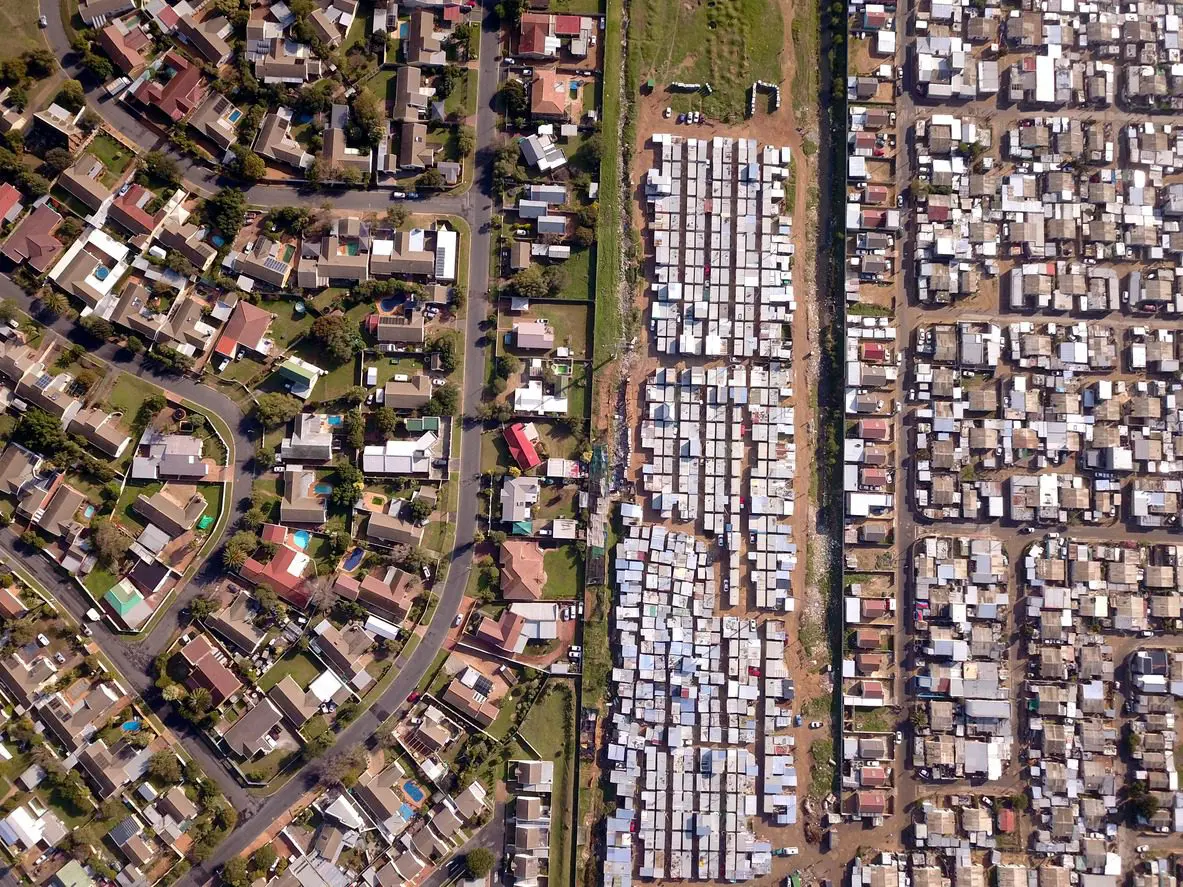
While policymakers and academics have increasingly focused on national-level taxation in lower-income countries, subnational taxation has remained relatively neglected. Yet subnational taxes have wide-ranging and direct impacts on citizens in low-income countries with important implications for small business growth, local service delivery, equity, transparency, and accountability.
Property taxes are of particular interest: they hold significant revenue potential, are non-distortionary and progressive and are easily linked to public services – yet they remain chronically underexploited in almost all lower-income countries. Our research aims to expand the empirical evidence base on property and subnational taxation, centred on three key questions: (1) why existing systems underperform; (2) what reform strategies could overcome barriers to reform, including where reform has succeeded; (3) how reform dynamics vary across contexts, to offer a contextually grounded understanding of reform challenges.
This work is led by the Local Government Revenue Initiative (LoGRI), based at the University of Toronto.
Key Resources
Subnational and Property Tax Library
Four priority areas for next year’s Financing for Development Conference
Does Information about Public Services Boost Tax Compliance? I conducted an experiment in Freetown to find out
This research was conducted alongside the ICTD/LoGRI-led initiative to implement comprehensive property tax reforms in Freetown, Sierra Leone. This reform…
Making the IMF Work for Sri Lankans
The government of Sri Lanka is negotiating a large conditional loan from the IMF. A formal agreement is likely to…
Implementing a systems approach for effective property taxation in Ghana
Ghanaian local governments – metropolitan, municipal, and district assemblies (MMDAs) – face several challenges preventing them from raising more revenue…
Increasing collection of income taxes via property ownership: The Borno State experience
Borno State, in north-eastern Nigeria, has faced intractable security challenges in the last decade that has led to the destruction…
Pandora’s box is open: What should lower-income countries do to tax the wealthy now?
The recent Pandora Papers leak has exposed yet again the scandal of how the world’s rich and powerful hide their…
First tax conference in Sierra Leone hailed a success
Call for Applications: Four fully-funded PhD scholarships in tax and development (Closed)
The International Centre for Tax and Development (ICTD) is a research centre aiming to improve tax policy and administration in…
Researchers and policymakers to discuss tax collection for Sierra Leone’s development
Dr Mutjaba Piracha wins in Bloomsbury Pakistan Book Prize
Seeking Senior Researcher/Zambia Country Expert
Closing date for applications is Monday, 21st March 2022 Background In the context of broader Zambian decentralisation efforts, the Local…
ICTD’s ‘Taxing Africa’ book authors featured on ‘Between the Lines’ podcast
In this episode of Between the Lines, Jalia Kangave interviews Mick Moore, and Wilson Prichard who along with Odd-Helge Fjeldstad…
Virtual
•
Timezone: Europe/Paris
While property taxation constitutes a major revenue source for subnational governments, it remains one of the most underperforming in lower-income countries. This is but one example of how, in many countries, subnational governments’ revenue-raising efforts are frequently ineffective, inequitable, and
In person
•
Timezone: Africa/Nairobi
Virtual
•
Timezone: Europe/London
The Addis Tax Initiative (ATI), in partnership with the Local Government Revenue Initiative (LoGRI), is presenting a series of four workshops on policy design for effective property taxation in lower-income countries. The two-day workshop on “Strategies for Cost-Effective Property Valuation
Virtual
•
Timezone: Europe/London
The ICTD’s Executive Director Dr Wilson Prichard and Researcher Dr Colette Nyirakamana will be speaking at an upcoming webinar on property taxes organized by the World Observatory on Subnational Government Finance and Investment in collaboration with the German Cooperation. The
Sign up to our Newsletter
Stay up to date with the latest articles, publications, events and more.