Research Theme
Tax Administration and Compliance
Many of the challenges low-income countries face in mobilising domestic resources are related to tax administration as much as tax policy. Our research on this theme encompasses all aspects of tax administration, from technology adoption, to data management and strategies for collecting revenue from different types of taxpayers. Tax compliance is a key focus, as low-income countries struggle with widespread evasion, corruption, and limited administrative capacity. Our research on compliance includes survey-based studies of taxpayers’ perceptions and attitudes, case studies, and large-scale field experiments.
Led By
Key Resources
Tax Administration and Compliance Library
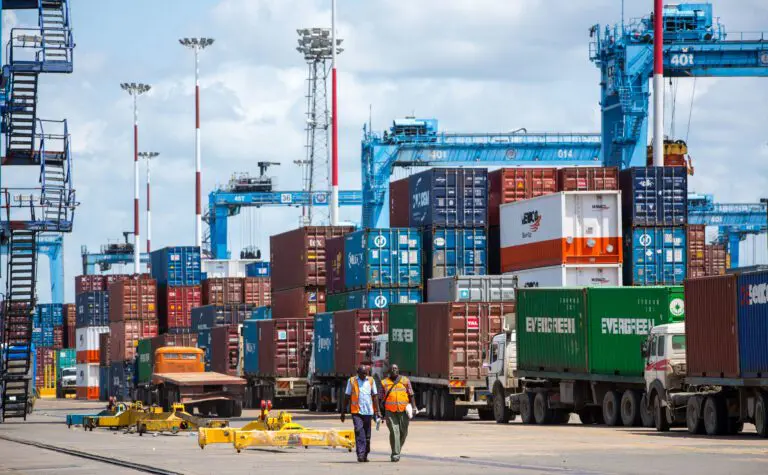
How can mirror statistics help combat customs fraud in developing countries?
International money laundering and international illicit financial flows (IFFs) are major problems for poor and rich countries alike, but especially…
Uganda should tax “Covid-19 winners” to fill revenue gaps
Globally, governments are adjusting their tax policies to help address the effects of the coronavirus pandemic. In most countries, these…
Unpacking Formalisation: The need for a new research agenda on taxation and the informal economy
ICTD Informality and Taxation blog series The ICTD’s Informality and Tax programme seeks to conduct, connect, and support novel research…
How can African tax collectors help cope with the economic impacts of Covid-19?
There is no scarcity of criticism of the methods that OECD governments have used – and not used – to…
Response to Richard Bird’s Critique of “Innovations in Tax Compliance”
At the request of the ICTD, Professor Richard Bird generously agreed to review the new World Bank publication Innovations in…
Review of new World Bank framework “Innovations in Tax Compliance”
See here for a response to Professor Bird’s critique by the World Bank framework’s lead author and ICTD Research Director…
ICTD recruiting Research Fellow & Lead Researcher for DIGITAX programme
ICTD is seeking a Lead Researcher for our new three-year research programme funded by the Bill and Melinda Gates Foundation…
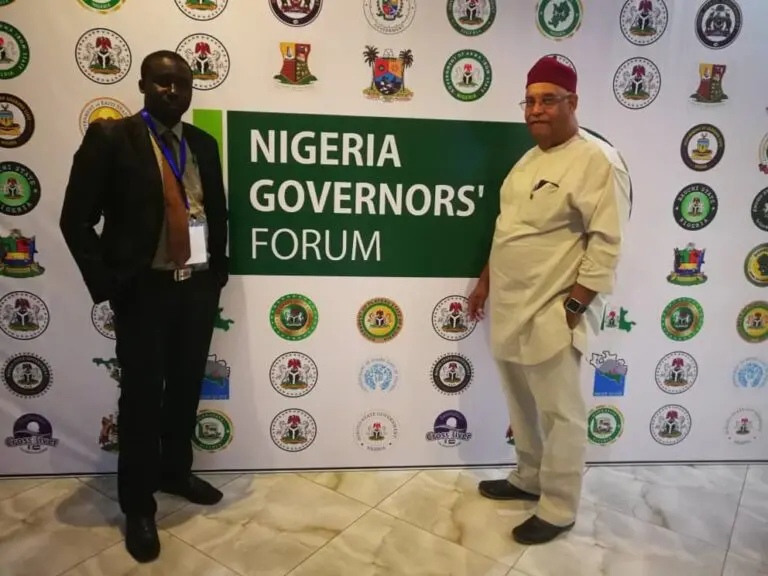
Research to Policy: NTRN research presented at the Nigeria Governors’ Forum
NTRN grantee Dr Abdulsalam Mas’ud participated in the Nigeria Governors’ Forum‘s (NGF) Internally Generated Revenue Peer Learning Event ‘The Imperative…
Dr. Waziona Ligomeka appointed Director of Policy, Planning & Research of Malawi Revenue Authority
The ICTD is pleased to share that Dr. Waziona Ligomeka has been appointed as the Director of Policy, Planning and…
ICTD CEO and Research Director present at Addis Tax Initiative conference
The ATI/ITC Tax and Development Conference was held this week in Berlin. ICTD CEO Professor Mick Moore spoke on the…
Better Tax initiative launched in Nigeria
The Nigerian Economic Summit Group (NESG) launched the Better Tax initiative on May 15th in Lagos. The initiative seeks to…
Call for research proposals on taxation of self-employed professionals (Closed)
The ICTD is open to new research proposals on the taxation of self-employed professionals in sub-Saharan Africa and South Asia….
Virtual
•
Timezone: Europe/London
Watch the event recording here. On February 8th, the ICTD’s Research Director Dr Giulia Mascagni will be speaking as a panellist at an event focusing on taxpayer education. Read her paper on the role of taxpayer education in Africa, on
Virtual
•
Timezone: Europe/London
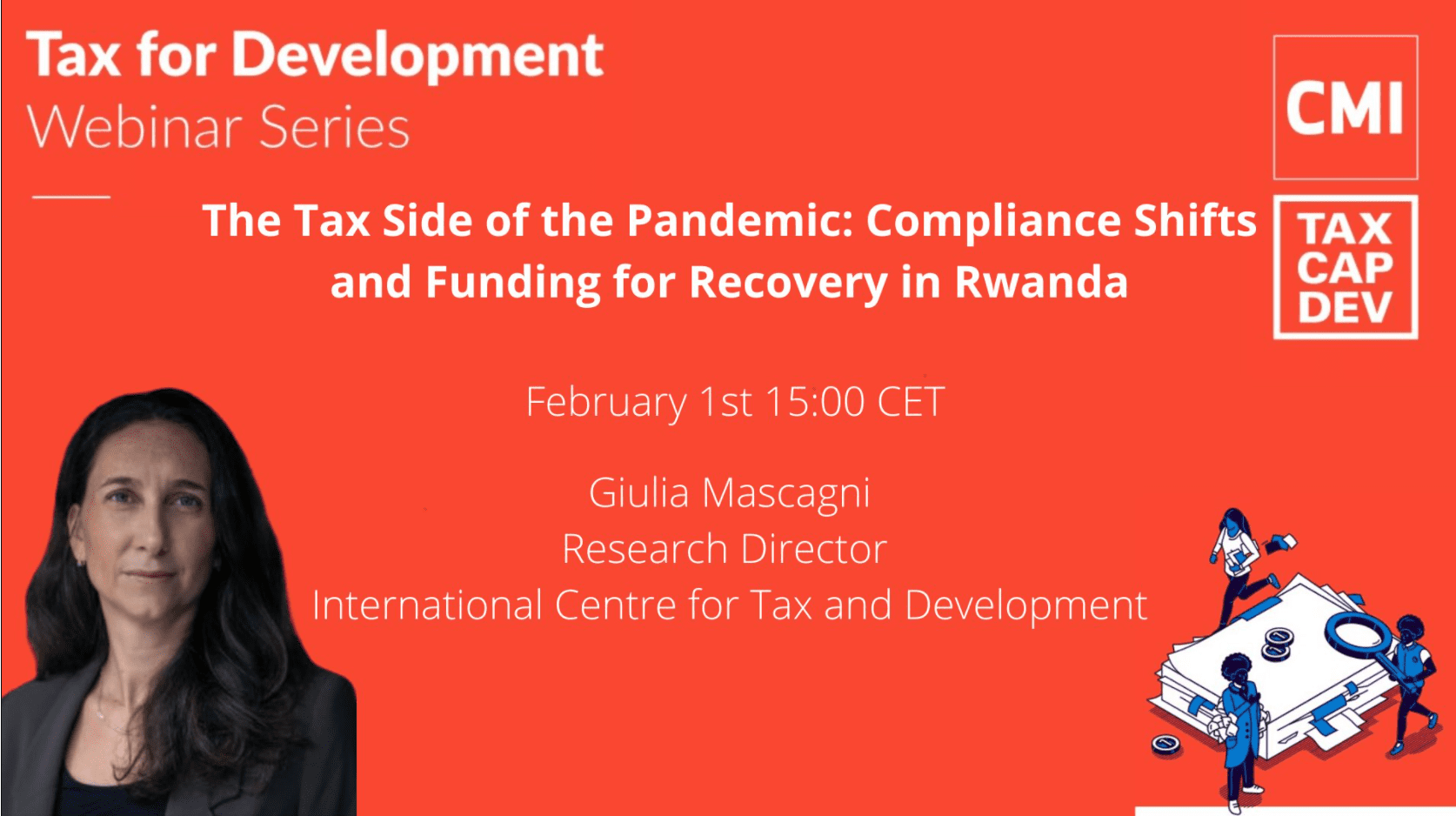
The ICTD’s Research Director Giulia Mascagni will be beginning this spring’s Tax for Development webinar series. This upcoming webinar, The Tax Side of the Pandemic: Compliance Shifts and Funding for Recovery in Rwanda, is the first of a series of

Virtual
•
Timezone: America/New_York
What impact has the Covid-19 pandemic had on taxpayer perceptions and tax compliance in low-income countries? In this seminar hosted by the World Bank, the ICTD’s Research Director Dr. Giulia Mascagni will present results from new research in Rwanda. Recently

Virtual
•
Timezone: Europe/London
A central aspect of institutional development in developing economies is building tax systems capable of raising revenues from broad tax bases; i.e., acquiring fiscal capacity. Improved fiscal capacity allows countries to generate much-needed resources for the provision of public goods
Sign up to our Newsletter
Stay up to date with the latest articles, publications, events and more.