Research Theme
Tax Administration and Compliance
Many of the challenges low-income countries face in mobilising domestic resources are related to tax administration as much as tax policy. Our research on this theme encompasses all aspects of tax administration, from technology adoption, to data management and strategies for collecting revenue from different types of taxpayers. Tax compliance is a key focus, as low-income countries struggle with widespread evasion, corruption, and limited administrative capacity. Our research on compliance includes survey-based studies of taxpayers’ perceptions and attitudes, case studies, and large-scale field experiments.
Led By
Key Resources
Tax Administration and Compliance Library
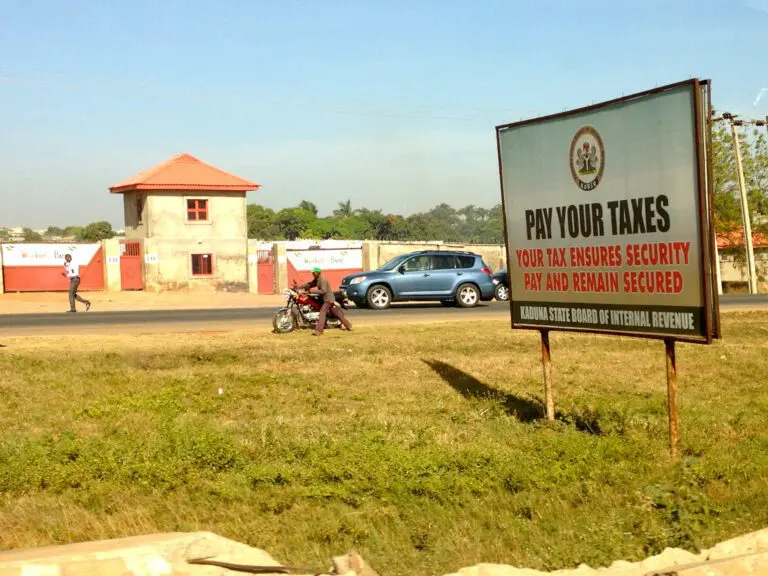
Enforcement, facilitation and trust: why pay taxes?
The government of Kaduna State, Nigeria, has been working to increase tax collection by broadening the tax base, investing in…
What Nigerians really think about tax
Nigeria’s performance on collected taxes is poor. Non-oil revenue in the country is around 3-4 percent of GDP, far below…
Improving property tax collection: Lessons from Uganda
Local governments (LGs) across Uganda have recently been looking for ways to improve yields from their property tax systems. The…
How to cast a wider tax net? Experimental evidence from Costa Rica
Many firms around the world fail to file their tax declarations, even if they are formally registered. This problem is…
Taxing Africa: Power, Politics, and Public Participation
Over the past decade, international attention has increasingly focused on the potential contribution of taxation to improved development outcomes. In…

Can Wealth Taxation Work in Developing Countries?
Developed countries have recently begun considering wealth taxes to raise revenue and curb rising inequality. Should developing countries follow suit?…
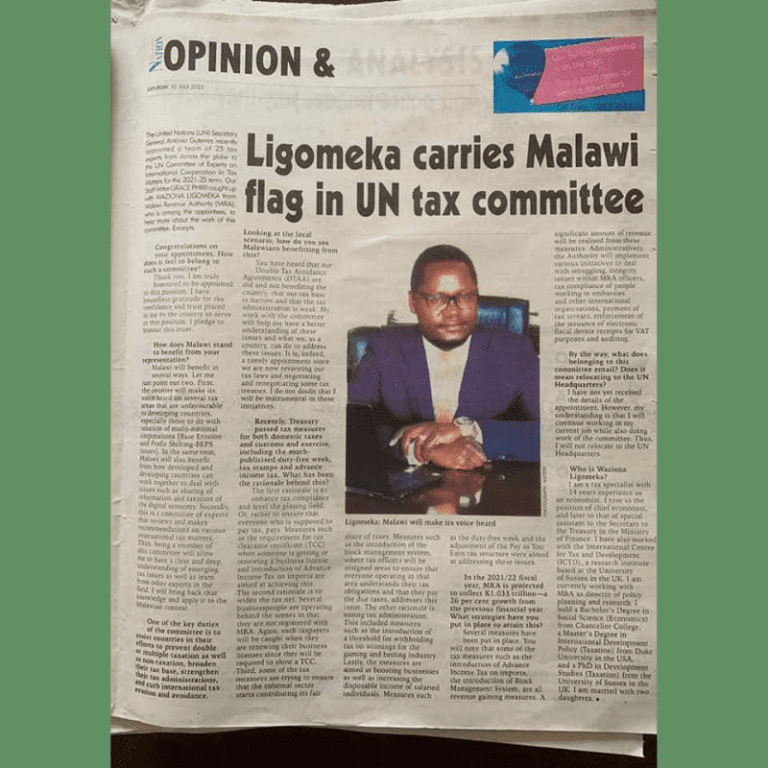
Dr Waziona Ligomeka appointed to UN Committee of Experts on International Cooperation in Tax Matters
The ICTD is very pleased to announce that Dr Waziona Ligomeka has been appointed to the United Nations Committee of…
Job Opportunity: Communications Consultant, DIGITAX Programme
Closing date for applications: July 24, 2021 The International Centre for Tax and Development (ICTD) is looking to hire a…
Opportunities for researchers to work with ICTD
Send an expression of interest by June 30th The ICTD is looking for talented, passionate and motivated junior researchers to…
Job Opportunity: Researcher, DIGITAX Programme
Closing date for applications: June 15, 2021 The ICTD has launched DIGITAX, a three-year research programme funded by the Bill…
ICTD’s Wilson Prichard and Vanessa van den Boogaard present at the 4th High-Level Tax Policy Dialogue
On August 26-27, the African Tax Administration Forum (ATAF) hosted its 4th High-Level Tax Policy Dialogue in partnership with the…
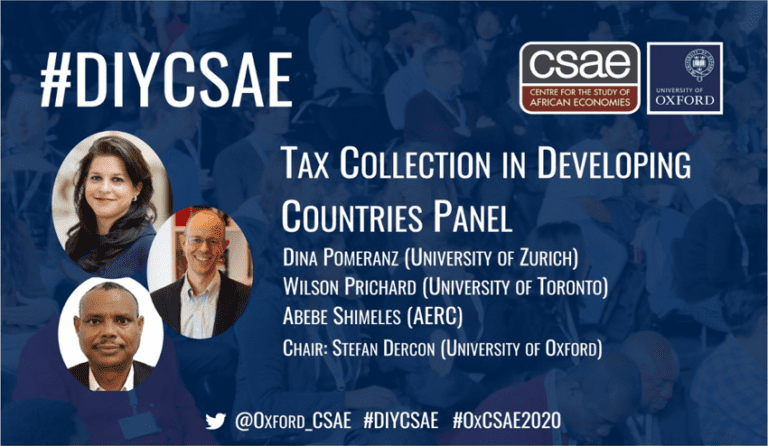
ICTD’s Wilson Prichard presents at virtual #DIYCSAE conference
The Centre for the Study of African Economies (CSAE) Conference 2020 is an annual event with a broad focus on…
Virtual
•
Timezone: Europe/London
Watch the event recording here. On February 8th, the ICTD’s Research Director Dr Giulia Mascagni will be speaking as a panellist at an event focusing on taxpayer education. Read her paper on the role of taxpayer education in Africa, on
Virtual
•
Timezone: Europe/London
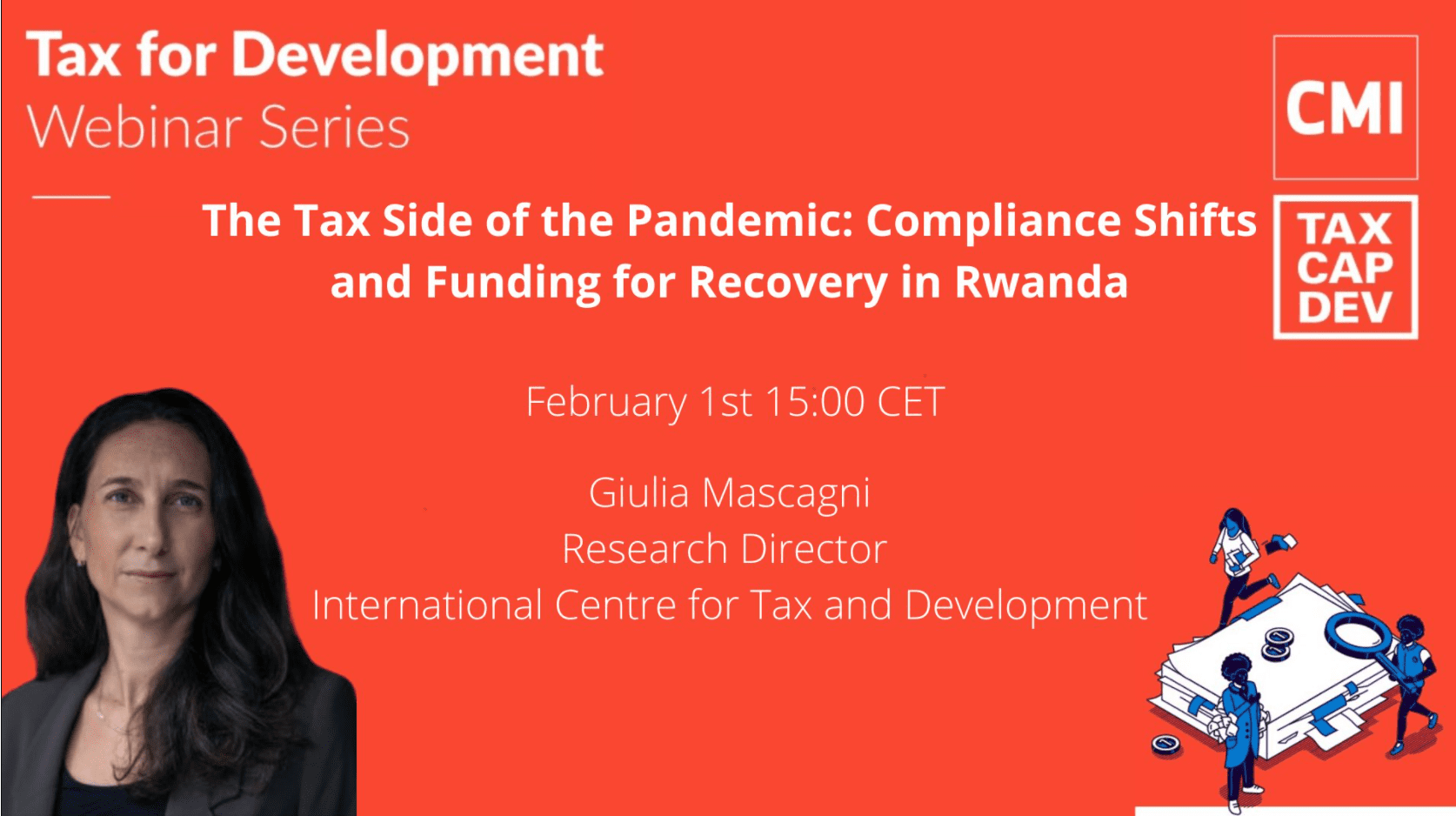
The ICTD’s Research Director Giulia Mascagni will be beginning this spring’s Tax for Development webinar series. This upcoming webinar, The Tax Side of the Pandemic: Compliance Shifts and Funding for Recovery in Rwanda, is the first of a series of

Virtual
•
Timezone: America/New_York
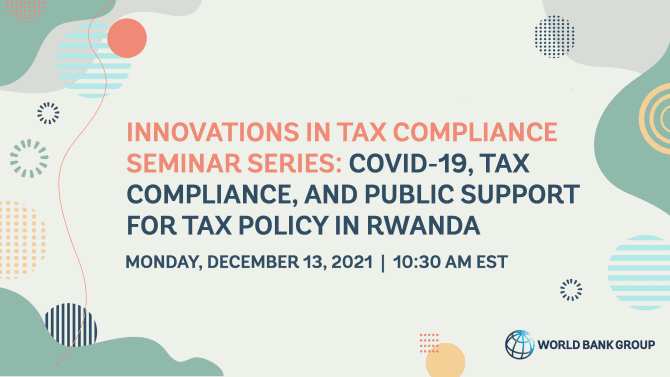
What impact has the Covid-19 pandemic had on taxpayer perceptions and tax compliance in low-income countries? In this seminar hosted by the World Bank, the ICTD’s Research Director Dr. Giulia Mascagni will present results from new research in Rwanda. Recently

Virtual
•
Timezone: Europe/London
A central aspect of institutional development in developing economies is building tax systems capable of raising revenues from broad tax bases; i.e., acquiring fiscal capacity. Improved fiscal capacity allows countries to generate much-needed resources for the provision of public goods
Sign up to our Newsletter
Stay up to date with the latest articles, publications, events and more.