Research Theme
Tax Administration and Compliance
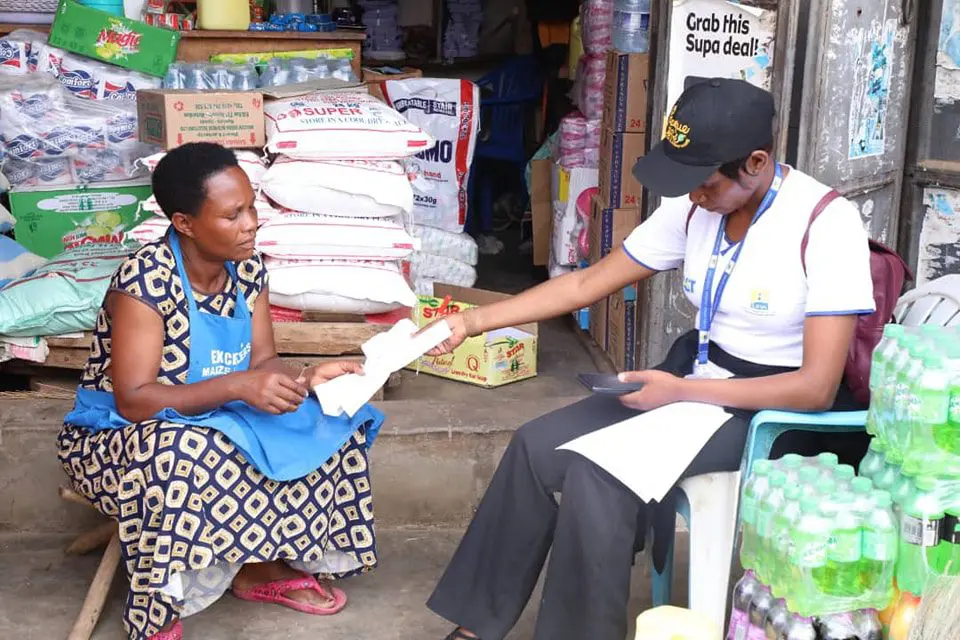
Many of the challenges low-income countries face in mobilising domestic resources are related to tax administration as much as tax policy. Our research on this theme encompasses all aspects of tax administration, from technology adoption, to data management and strategies for collecting revenue from different types of taxpayers. Tax compliance is a key focus, as low-income countries struggle with widespread evasion, corruption, and limited administrative capacity. Our research on compliance includes survey-based studies of taxpayers’ perceptions and attitudes, case studies, and large-scale field experiments.
Led By
Key Resources
Tax Administration and Compliance Library
How do entrepreneurs in the poorest countries navigate taxes?
In low-income countries, small firms account for the majority of taxpayers (World Bank 2011). Yet we know little about how…
Cash on delivery for domestic resource mobilisation? Three key challenges
Nancy Lee from the Centre for Global Development (CGD) recently published a piece arguing for a “surge in support” for…
Three wealth tax add-ons developing countries should consider
Interest in wealth taxes has spiked recently due to disclosures of tax-haven abuses by the ultra-wealthy (the Panama Papers in…
Updated Government Revenue Dataset provides new insights into developing country tax collection trends
The increasing focus on domestic resource mobilization in developing countries means that, for researchers and policy makers, access to accurate…
Make informal businesses profitable, then seek taxes
Last week I participated in a panel discussion at the Kenya Revenue Authority (KRA) Tax Summit on tax policy and…
Give and you shall receive? Taxation and fiscal contracts in Africa
Last week, the Institute of Development Studies hosted its 50th anniversary conference titled “States, Markets and Society“. As part of…
Virtual
•
Timezone: Europe/London
Revenue administrations have recently been investing significant efforts into registering a large number of new taxpayers, in the broader quest to formalise the informal sector. But have these efforts been effective in increasing revenue and improving administration? The ICTD hosted
In person
•
Timezone: Africa/Nairobi
Virtual
•
Timezone: Europe/London
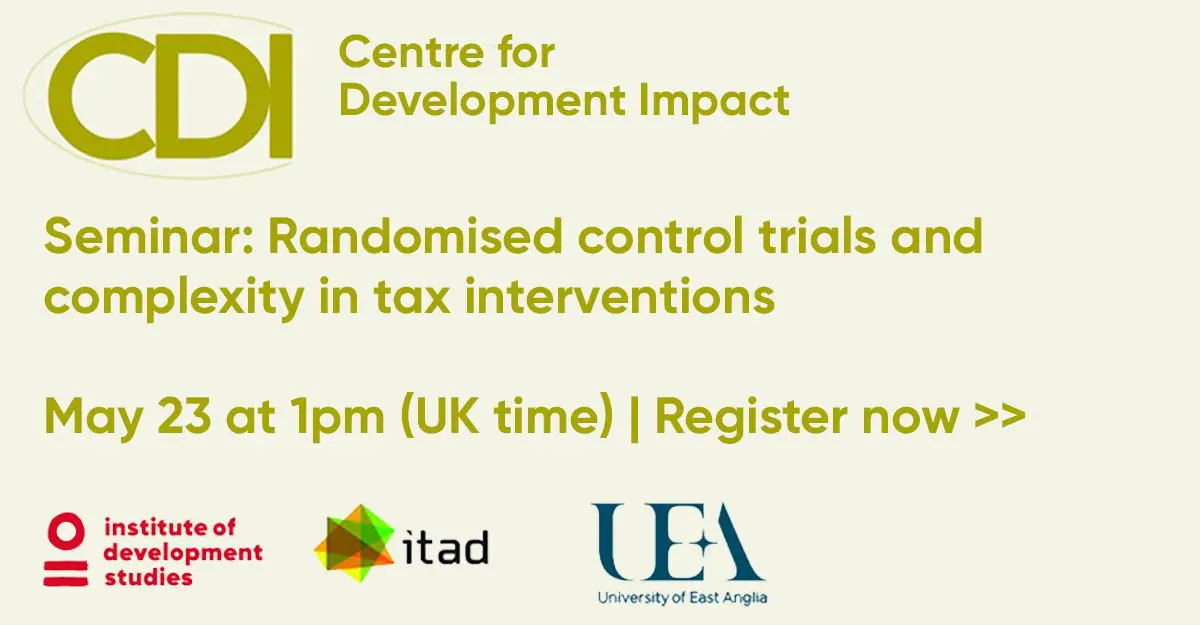
Randomised controlled trials is a method that comes with strengths and weaknesses. Especially in theory-based evaluations of complex programmes, the method is often considered as inappropriate. https://www.youtube.com/watch?v=tDKcykdVs04&ab_channel=InstituteofDevelopmentStudies Giulia Mascagni will reflect on the strengths and weaknesses of the method for

Virtual
•
Timezone: Europe/London
Date: 30th May 2023, 13:30 – 14:30 London time Duration: 60 minutes Language: English only There are three puzzling features of Sub-Saharan African tax systems. First, tax administrations maintain records on vast numbers of small enterprises that actually provide no

Sign up to our Newsletter
Stay up to date with the latest articles, publications, events and more.