Research Theme
Tax Administration and Compliance
Many of the challenges low-income countries face in mobilising domestic resources are related to tax administration as much as tax policy. Our research on this theme encompasses all aspects of tax administration, from technology adoption, to data management and strategies for collecting revenue from different types of taxpayers. Tax compliance is a key focus, as low-income countries struggle with widespread evasion, corruption, and limited administrative capacity. Our research on compliance includes survey-based studies of taxpayers’ perceptions and attitudes, case studies, and large-scale field experiments.
Led By
Key Resources
Tax Administration and Compliance Library
Uganda’s tax system is a drain on small businesses: how to set them free
Taxes, trust, and transparency: Lessons for Ghana’s fiscal future
Ghanaian President John Mahama’s government presented its much-awaited 2025 budget last month. In it, Finance Minister Cassiel Ato Forson outlines…
From Identification to Stronger Tax Administration: Can Digital IDs Deliver?
In many low- and middle-income countries (LMICs), strengthening state capacity and expanding the tax base are fundamental to improving public…
Ghana’s e-levy: 3 lessons from the abolished mobile money tax
Four priority areas for next year’s Financing for Development Conference
The digital transformation of tax administrations: What’s in it for low-income countries?
As governments worldwide, particularly in low- and middle-income countries (LMICs), push towards digital transformation, the platformisation of public services offers…
ICTD recruiting Research Fellow & Lead Researcher for DIGITAX programme
ICTD is seeking a Lead Researcher for our new three-year research programme funded by the Bill and Melinda Gates Foundation…
Research to Policy: NTRN research presented at the Nigeria Governors’ Forum
NTRN grantee Dr Abdulsalam Mas’ud participated in the Nigeria Governors’ Forum‘s (NGF) Internally Generated Revenue Peer Learning Event ‘The Imperative…
Dr. Waziona Ligomeka appointed Director of Policy, Planning & Research of Malawi Revenue Authority
The ICTD is pleased to share that Dr. Waziona Ligomeka has been appointed as the Director of Policy, Planning and…
ICTD CEO and Research Director present at Addis Tax Initiative conference
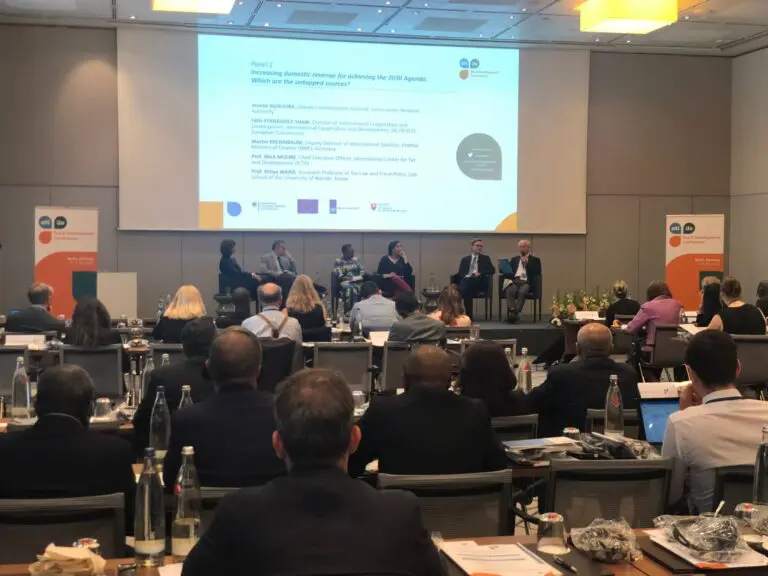
The ATI/ITC Tax and Development Conference was held this week in Berlin. ICTD CEO Professor Mick Moore spoke on the…
Better Tax initiative launched in Nigeria
The Nigerian Economic Summit Group (NESG) launched the Better Tax initiative on May 15th in Lagos. The initiative seeks to…
Call for research proposals on taxation of self-employed professionals (Closed)
The ICTD is open to new research proposals on the taxation of self-employed professionals in sub-Saharan Africa and South Asia….
Virtual
•
Timezone: Europe/London
Revenue administrations have recently been investing significant efforts into registering a large number of new taxpayers, in the broader quest to formalise the informal sector. But have these efforts been effective in increasing revenue and improving administration? The ICTD hosted
In person
•
Timezone: Africa/Nairobi
Virtual
•
Timezone: Europe/London
Randomised controlled trials is a method that comes with strengths and weaknesses. Especially in theory-based evaluations of complex programmes, the method is often considered as inappropriate. https://www.youtube.com/watch?v=tDKcykdVs04&ab_channel=InstituteofDevelopmentStudies Giulia Mascagni will reflect on the strengths and weaknesses of the method for

Virtual
•
Timezone: Europe/London
Date: 30th May 2023, 13:30 – 14:30 London time Duration: 60 minutes Language: English only There are three puzzling features of Sub-Saharan African tax systems. First, tax administrations maintain records on vast numbers of small enterprises that actually provide no

Sign up to our Newsletter
Stay up to date with the latest articles, publications, events and more.