Research Theme
Tax Administration and Compliance
Many of the challenges low-income countries face in mobilising domestic resources are related to tax administration as much as tax policy. Our research on this theme encompasses all aspects of tax administration, from technology adoption, to data management and strategies for collecting revenue from different types of taxpayers. Tax compliance is a key focus, as low-income countries struggle with widespread evasion, corruption, and limited administrative capacity. Our research on compliance includes survey-based studies of taxpayers’ perceptions and attitudes, case studies, and large-scale field experiments.
Led By
Key Resources
Tax Administration and Compliance Library
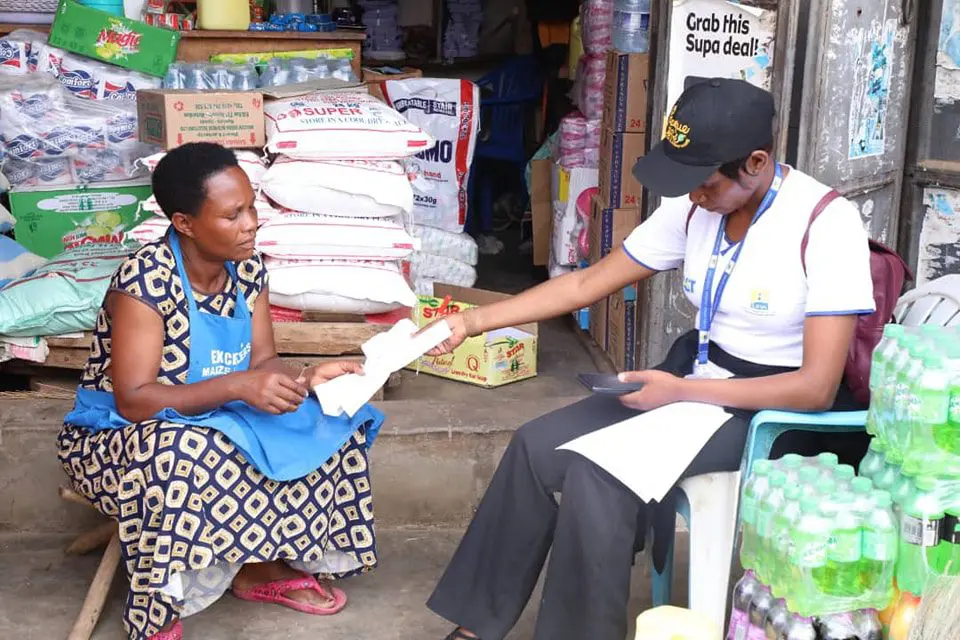
Does Information about Public Services Boost Tax Compliance? I conducted an experiment in Freetown to find out
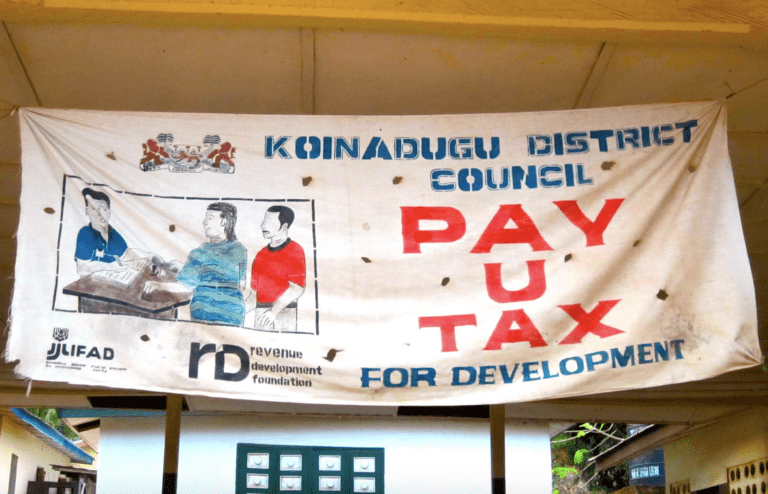
This research was conducted alongside the ICTD/LoGRI-led initiative to implement comprehensive property tax reforms in Freetown, Sierra Leone. This reform…
We interviewed 83 tax collectors in Malawi and here is what we learnt
Tax specialists have a great deal to say about how African tax collectors could work better but rarely seem to…
Why don’t governments collect more revenue? The answer is complex but here are some new insights
Why don’t governments collect more tax revenue? This question is particularly relevant to lower income countries as many of their…
How digital public infrastructure could transform tax administration in Africa
Evidence suggests that digital public infrastructure (DPI) can greatly simplify tax administration and boost tax compliance. However, some persistent challenges…
Design features of simplified tax regimes for small businesses in Sub-Saharan Africa
Why Cameroon’s mobile money agents are struggling to increase revenue
ICTD Annual Meeting in Kigali: “What Next for Tax Research in Africa?”
ICTD announces new capacity building program with Uganda and Rwanda revenue authorities
On February 8th, the International Centre for Tax and Development (ICTD) announced a new capacity-building program with the Ugandan and…
ICTD Welcomes New Research Proposals (Call now closed)
The ICTD is now in a position to fund new research proposals on tax and development. We welcome all proposals…
ICTD and URA host African Tax Administrators’ Research Day
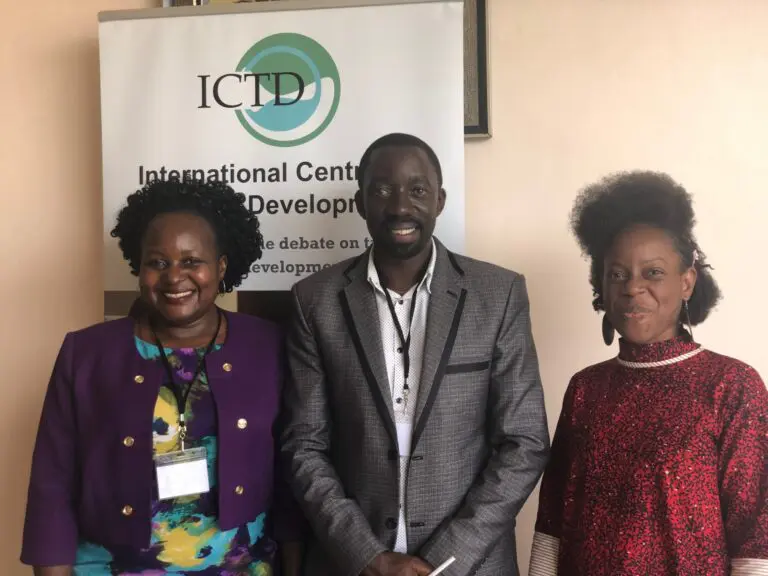
ICTD Capacity Building Manager Jalia Kangave with Denis Mukama of the Rwanda Revenue Authority and Milly Isingoma Nalukwago of the…
ICTD signs MOU with FIRS for collaboration on tax research in Nigeria
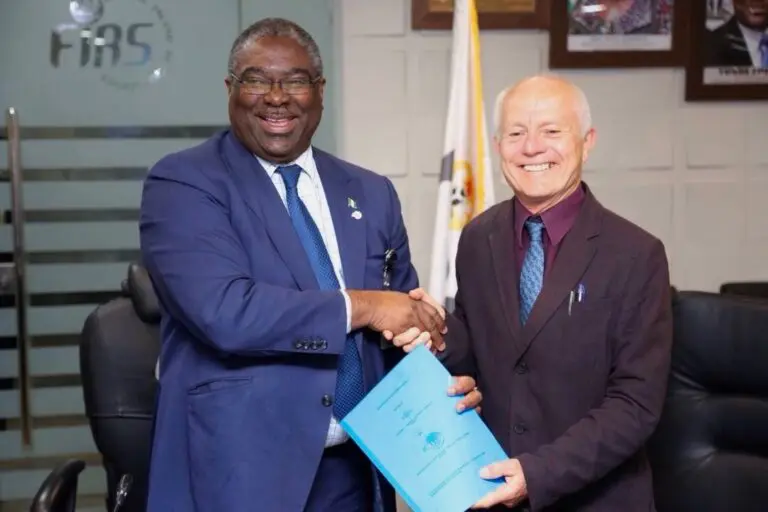
FIRS Executive Chairman Tunde Fowler and ICTD CEO Professor Mick Moore after signing the MOU. On September 13th, the ICTD…
Ethiopian Tax Research Network Launched in Addis Ababa
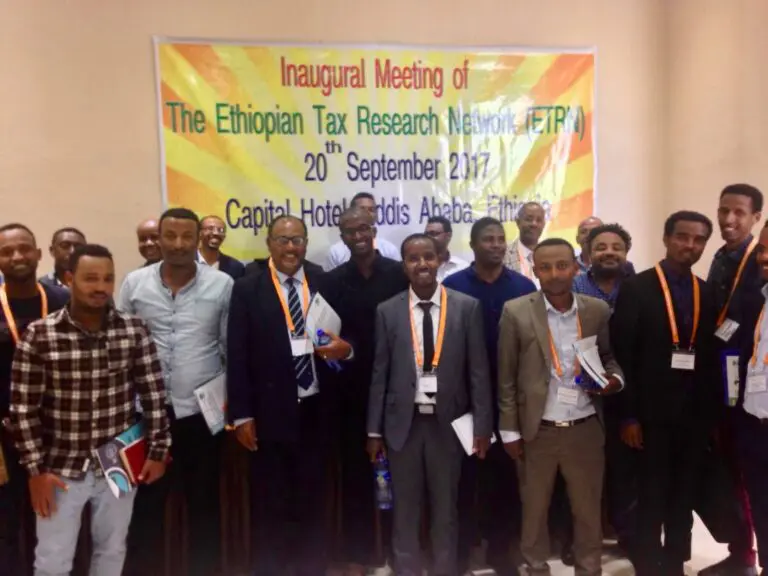
On September 20th, the ICTD launched the Ethiopian Tax Research Network (ETRN) at the Capital Hotel in Addis Ababa. Funded…
Virtual
•
Timezone: Europe/London
Revenue administrations have recently been investing significant efforts into registering a large number of new taxpayers, in the broader quest to formalise the informal sector. But have these efforts been effective in increasing revenue and improving administration? The ICTD hosted
In person
•
Timezone: Africa/Nairobi
Virtual
•
Timezone: Europe/London
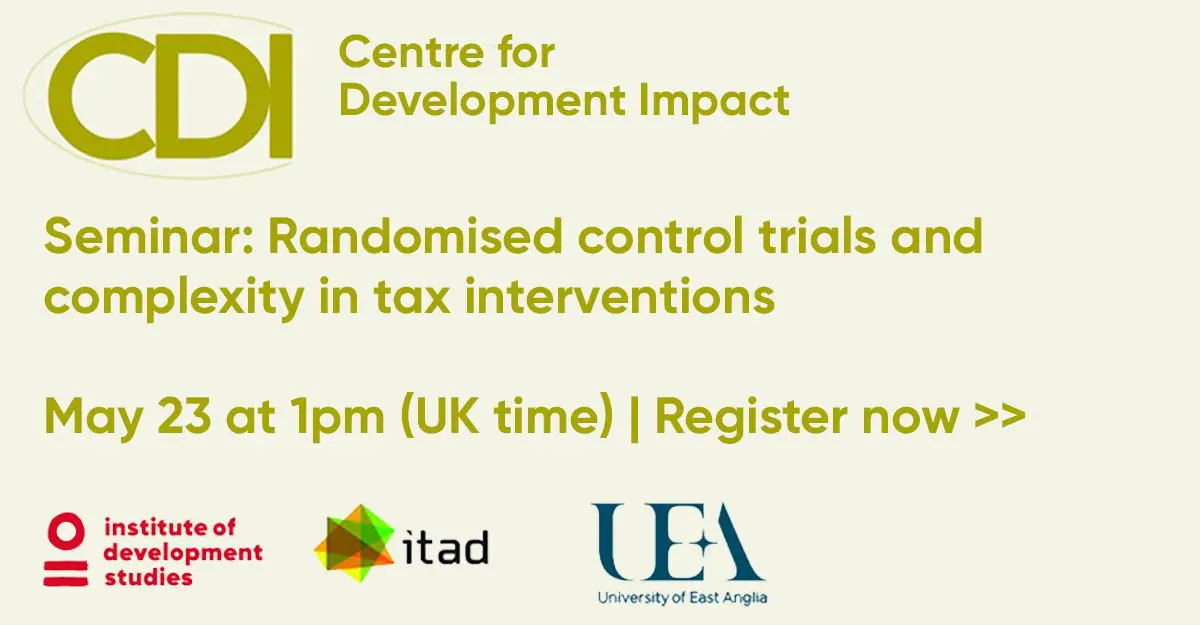
Randomised controlled trials is a method that comes with strengths and weaknesses. Especially in theory-based evaluations of complex programmes, the method is often considered as inappropriate. https://www.youtube.com/watch?v=tDKcykdVs04&ab_channel=InstituteofDevelopmentStudies Giulia Mascagni will reflect on the strengths and weaknesses of the method for

Virtual
•
Timezone: Europe/London
Date: 30th May 2023, 13:30 – 14:30 London time Duration: 60 minutes Language: English only There are three puzzling features of Sub-Saharan African tax systems. First, tax administrations maintain records on vast numbers of small enterprises that actually provide no

Sign up to our Newsletter
Stay up to date with the latest articles, publications, events and more.