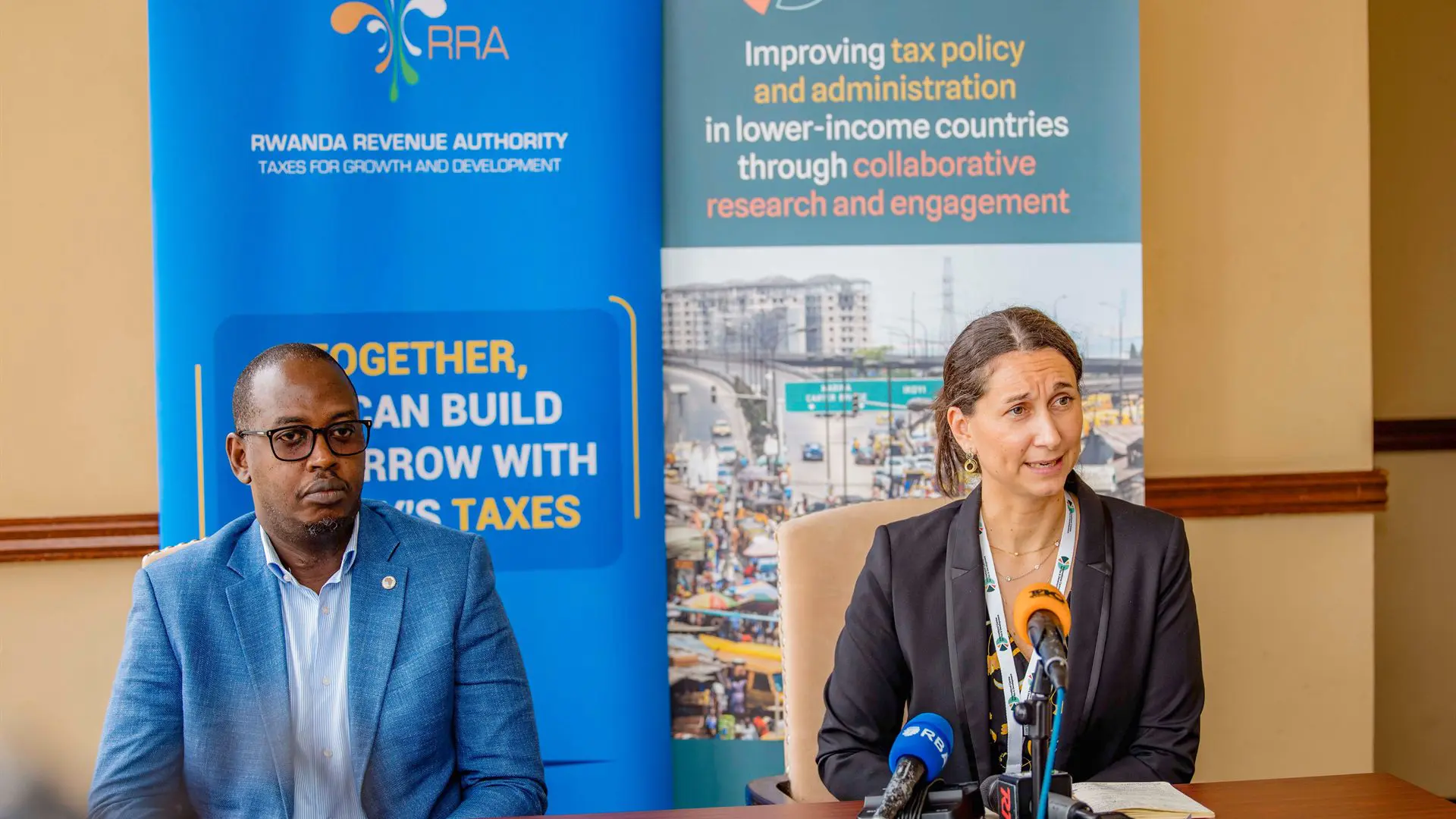
From registration drives to risk-based administration
Many tax reform programmes have treated rapid expansion of taxpayer registers as a sign of progress. More registrations can seem to promise a broader tax base, better data, and higher revenue. But ICTD research has shown that registration only matters if it leads to meaningful engagement, accurate records, and sustained compliance.
Drawing on evidence from countries including Rwanda, Uganda, and Sierra Leone, ICTD research has shown the limits of registration drives that are disconnected from follow-up. Large increases in taxpayer registration often yield little additional revenue, while creating registers that are costly to maintain.
In Rwanda, research on ‘active ghosts’ showed that many taxpayers remained inactive or filed nil returns, adding to administrative workload without generating revenue. The evidence helped inform a major deregistration effort: 117,500 accounts were deregistered or deactivated over 2024 and 2025. Digital identity and automated registration systems can make the same problem larger and faster: visibility is not the same as compliance. In Uganda, ICTD research showed that automatically registering taxpayers through third-party data had sharply expanded the register, while generating very little revenue and creating duplicate records. Based on the evidence, the Uganda Revenue Authority paused the use of third-party data for mass registration, added a manual verification step, and reviewed how the registration process should be redesigned.
Together, this body of research has strengthened the case for risk-based administration: prioritising revenue potential, supporting new taxpayers, improving data quality, and avoiding the use of scarce administrative capacity on inactive firms or low-income earners that is unlikely to generate meaningful revenue.
ICTD's contributions have played a vital role in strengthening our research capacity and fostering evidence-based policymaking in tax administration.
Ronald Niwenshuti Commissioner General, Rwanda Revenue Authority

Related experts







Using data to strengthen compliance and taxpayer support
ICTD research has also shown that weak compliance is not only a matter of unwillingness to pay. It often also reflects the cost, complexity, and day-to-day frictions of dealing with the tax system. For smaller firms in particular, these costs can be high relative to the taxes they pay, making the system both less efficient and less fair.
Digitalisation has opened new possibilities for addressing these problems. Electronic billing machines, e-filing, digital payments, and linked administrative datasets can help revenue authorities identify discrepancies, monitor compliance, and make it easier for taxpayers to meet their obligations.
ICTD research with the Rwanda Revenue Authority matched data from VAT declarations, electronic billing machines, and other administrative sources, revealing major discrepancies in reported transactions: only 18 per cent of observations reported the same VAT amount across buyers and sellers. Resolving these discrepancies was estimated to yield potential revenue gains of more than US$58 million.
The research also showed that smaller firms were often missing out on refunds because they struggled to navigate the system. In response, the revenue authority strengthened its risk management strategy, introduced more systematic cross-checks between VAT, income tax, and electronic billing machine data, and began following up with taxpayers who had failed to claim refunds.
Evidence from Ethiopia reinforces the wider lesson. ICTD research found that electronic sales registration machines increased reported sales and tax payments, while also showing that taxpayers may respond strategically, including by shifting misreporting elsewhere. Digital tools can therefore generate better data and strengthen compliance, but only when administrations have the analytical capacity to use that data, the enforcement capacity to follow up, and the service orientation to support taxpayers who struggle with the system.
Related experts
Property taxation: designing reform that fits local realities
Property tax is central to effective local revenue mobilisation, but remains one of the most underperforming taxes across lower-income countries. This reflects administrative models, often inherited from the colonial period, that are complex, costly, and poorly suited to local administrative realities, as well as deeply entrenched political resistance to reform.
The Local Government Revenue Initiative (LoGRI), an initiative of ICTD, has helped develop more effective reform strategies through research and support for implementation. Across multiple countries, it has demonstrated the greater effectiveness and equity of simplified approaches to property mapping and valuation, supported the development of fit-for-purpose digital systems, and developed and tested strategies to overcome political resistance to reform.
In Sierra Leone and the Democratic Republic of the Congo, LoGRI-supported projects have added more than 160,000 properties to tax registers across four cities, while introducing comprehensive reforms to valuation, billing, collection, and the full digitalisation of administration. In Freetown, Sierra Leone, reform led to a fivefold increase in revenue potential, a tripling of revenue collection, major improvements in equity, and widespread public support.
That initial reform has since expanded to other cities, and the digital system first developed there has been adopted nationally and connected to Sierra Leone’s broader public financial management systems.
In Senegal, a partner-led pilot tripled compliance in target areas and generated US$1.67 million in additional revenue, while helping create the legal basis for wider rollout. In Malawi, diagnostic and advisory work informed a major property tax reform programme and contributed to legal changes creating space for alternative valuation methods. In Benin, Togo, and Zambia, diagnostic work and pilots are shaping the next phase of reform, while LoGRI is supporting similar reform discussions in a dozen other countries.
The wider lesson is that practical reform starts from fit-for-purpose administration and strategies to navigate political resistance. It depends on methods that reflect local administrative realities, diagnostics that identify binding constraints, and collaboration with governments to test, adapt, and scale up workable solutions.
Related experts