
Shedding light on realities on the ground
The starting point for ICTD’s analysis of international tax was to understand how international tax standards are adopted and used in lower-income countries, and what changes could benefit the global South. ICTD supported local researchers to conduct practical research on transfer pricing rules, treaty negotiations, digital services, and exchange of information systems across the African continent, from Nigeria to Ethiopia and beyond. These studies demonstrated that aspects of international standards were inappropriate for lower-income contexts, especially when compounded by gaps in policymaking and administrative capacity. ICTD research examined alternative approaches to core international tax norms years before they began to be reexamined in multilateral negotiations.

Related experts



Data for stronger treaty negotiations
Bilateral tax treaties shape how cross-border income is taxed, but negotiations have often taken place with limited transparency and comparative evidence. ICTD helped change that by creating The Tax Treaties Explorer Dataset (The Explorer), covering more than 2,500 bilateral treaties, related protocols, and treaty changes involving lower income countries.
The Explorer makes otherwise dense and technical treaty texts visible and comparable, allowing researchers to generate new knowledge, technical officials to analyse treaty risks and negotiation options, and negotiators to communicate more clearly with policymakers about the trade-offs involved.
Its practical value has driven wide uptake. The Explorer has been consulted by users in almost every country, and cited in IMF publications and the Platform for Collaboration on Tax’s Toolkit on Tax Treaty Negotiations. From Senegal to Sri Lanka, the Explorer has been used by governments, civil society organisations, and technical assistance providers to support treaty network evaluations and preparations for negotiations.
The Explorer gives us access to information that is really necessary. As a negotiator, I wish I had this 10 years ago.
Marine Khurtsidze Head of the Tax and Customs Policy Department, Ministry of Finance of Georgia
Strengthening lower-income countries’ voice in global tax negotiations
As global tax negotiations intensified through the G20/Organisation for Economic Co-operation and Development (OECD) Inclusive Framework on Base Erosion and Profit Shifting and at the United Nations (UN), ICTD research examined how lower-income countries were participating in those processes, and the obstacles they faced. The key issue was not formal inclusion, but the practical barriers that limited meaningful participation: the complexity of international tax rules, constrained negotiating capacity, limited resources, and unequal access to information. ICTD’s research and commentary helped bring those challenges into view, and sharpened the case for making international tax governance more inclusive and more responsive to the realities of lower-income countries.
ICTD’s research helped bolster calls from African countries and the wider Global South for reform of international tax governance. Its work on lower-income countries’ participation in the Inclusive Framework provided evidence for a concern repeatedly raised by developing countries: that formal inclusion does not automatically translate into meaningful influence. It was cited by the OECD Secretariat, World Bank, UN Trade and Development, and in key UN documents leading up to the negotiation of a new Framework Convention on International Tax Cooperation.
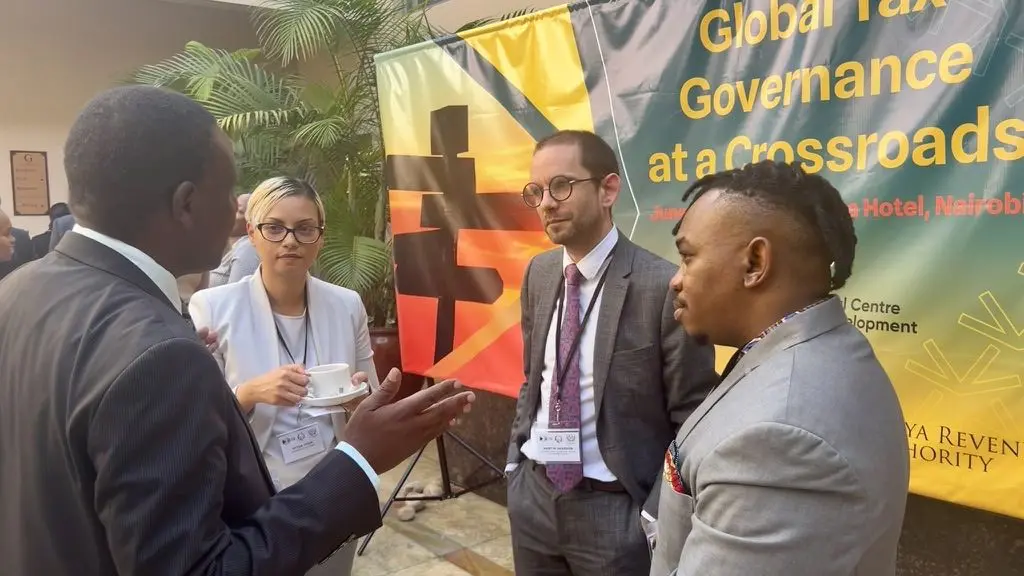
ICTD researchers have continued to contribute to this next phase through research, publications, workshops, and briefings attended by negotiators and international organisations, helping build broader recognition that international tax rules, institutions, and standards need to better reflect the need.
Related reading
Related experts