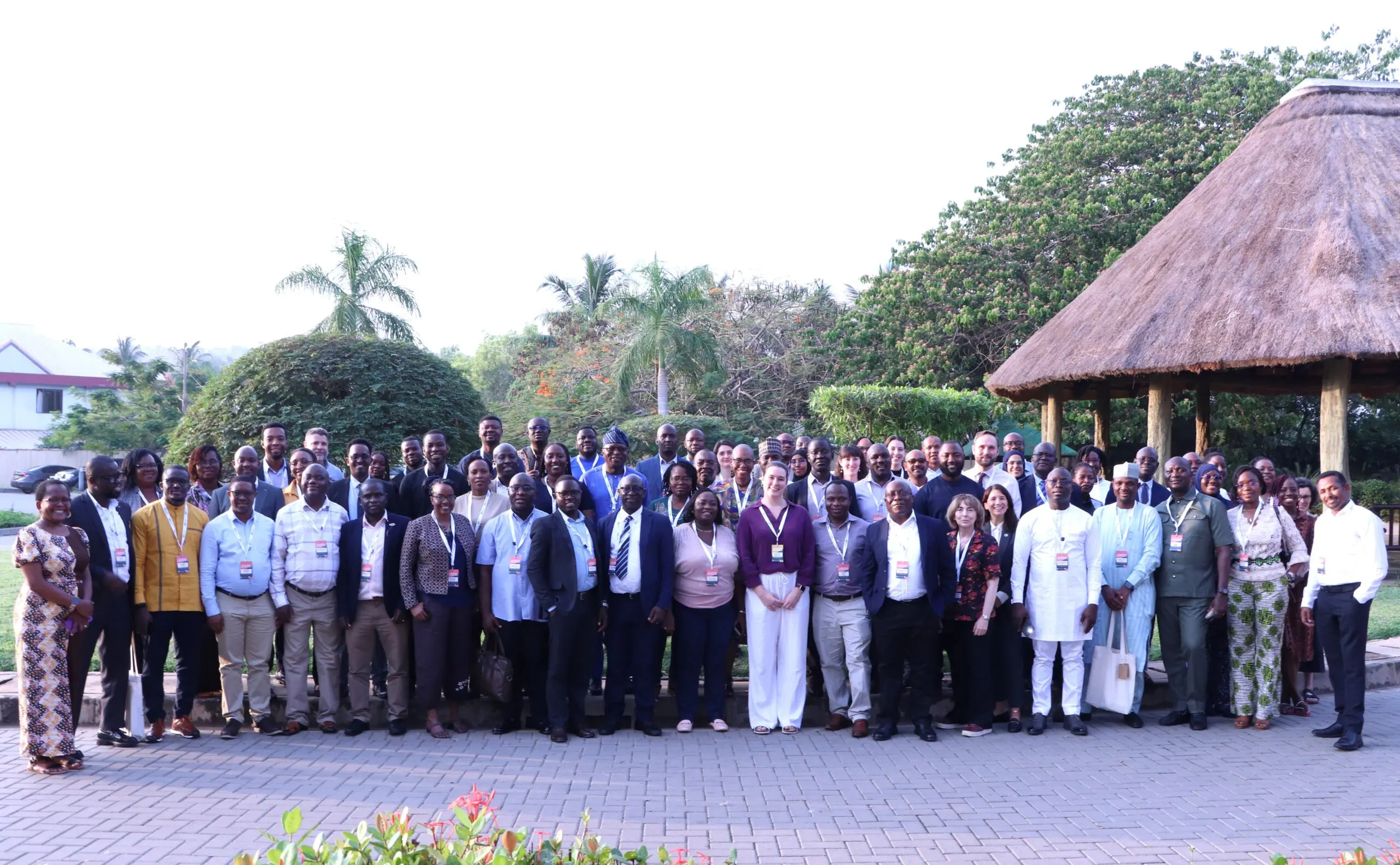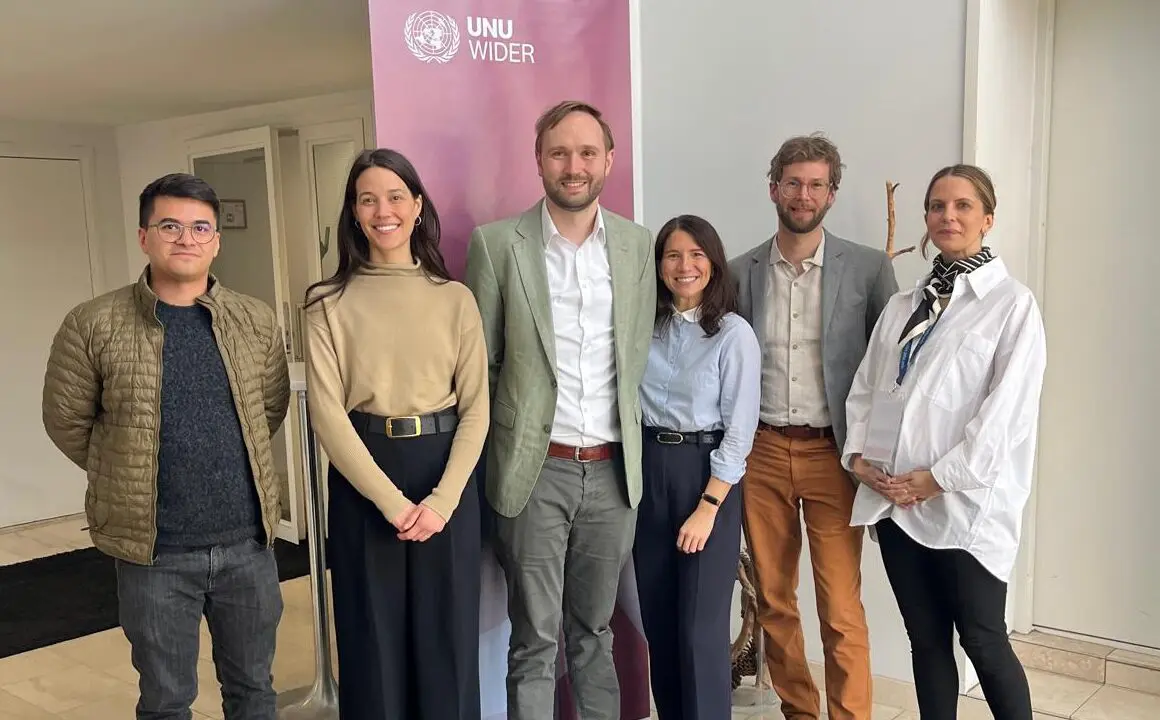
Hosted by the United Nations University-World Institute for Development Economics Research (UNU-WIDER), in partnership with the Inter-American Development Bank and the World Bank, a workshop was held on March 27-28 in Helsinki to discuss the Fiscal Foundations of State-building in Fragile Settings and Strengthening Fiscal and Institutional Capacity in Fragile Contexts. As highlighted by Patricia Justino, Deputy Director of UNU-WIDER, this event aimed to “bring two worlds” (taxation and armed conflict) together in one place to discuss perspectives that integrate both worlds and produce recommendations for the implementation of public policies at the global level.
In this workshop, ICTD researchers strengthened ties with scholars from regions such as Latin America and used this space to launch the Global Dataset on Armed Group Taxation project, developed in collaboration with the Centre on Armed Groups. At the end of the first day, this project had a special session, receiving several positive comments and recommendations that will enrich its development.
Inquiring about taxation in fragile contexts
During the first day of the event, discussions revolved around the development of taxation in Mexico, taxation dynamics related to armed groups and armed conflict contexts in Burkina Faso, Colombia, Philippines and India, and criminal governance and extortion in cities such as Rio de Janeiro (Brazil) and Medellin (Colombia).
Within the different presentations, two ICTD affiliates presented their research: Tanya Bandula-Irwin and Ana Isabel López García. Bandula-Irwin presented novel research on taxation systems implemented by armed groups, conducting comparative research between the New People’s Army (CPP-NPA) and the Moro Islamic Liberation Front (MILF), in the Philippines, to study the development and evolution of taxation systems implemented by both groups. This research developed a framework for understanding the level of organisation of armed groups’ taxation systems, who and how they taxed, and the limitations of each system, finding that elements such as armed groups’ relationship with the population, sources of funding, and military behaviour and capacity can be directly related to the type of tax system implemented by the armed groups.
In turn, López García presented a joint investigation on the effect of the presence of Organised Crime Groups (OCG) on municipal finances (revenues and expenditures) in Mexico. In general terms, this research found that the presence of armed groups weakens fiscal performance at the local level, resulting in a reduced capacity for local investment that decreases the civilian population’s trust in local governments, making municipalities more dependent on resources from the central state.
On the final day of the event, high-level policy discussion panels took place, featuring Vanessa van den Boogaard (ICTD), Max Gallien (ICTD), and Ashley Jackson (Centre on Armed Groups). Jackson and Gallien participated in a discussion about approaches to enhancing institutional and fiscal capacity in fragile contexts, giving their insights from experiences in Afghanistan and Africa.
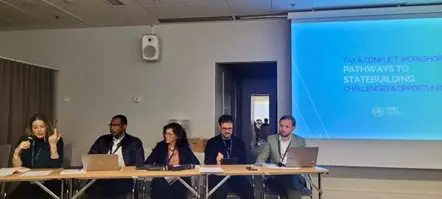
For her part, van den Boogaard took part in a panel on the role of international development cooperation in aiding institutional and fiscal recovery in fragile settings.
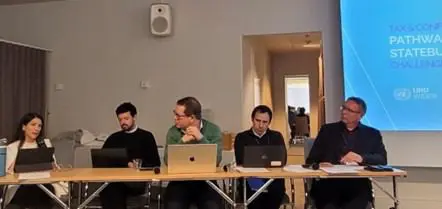
Global Dataset on Armed Group Taxation
The last session of the first day was used by ICTD researchers and their partners from the Centre on Armed Groups to launch the Global Dataset on armed group taxation. This project aims to build the first global dataset focused on armed group taxation practices and their variation over time. The dataset will gather information about armed groups worldwide between 1990 and 2025 through expert surveys. Using this data and other key conflict datasets, the project will identify patterns in taxation and their impact on areas such as governance and violence.
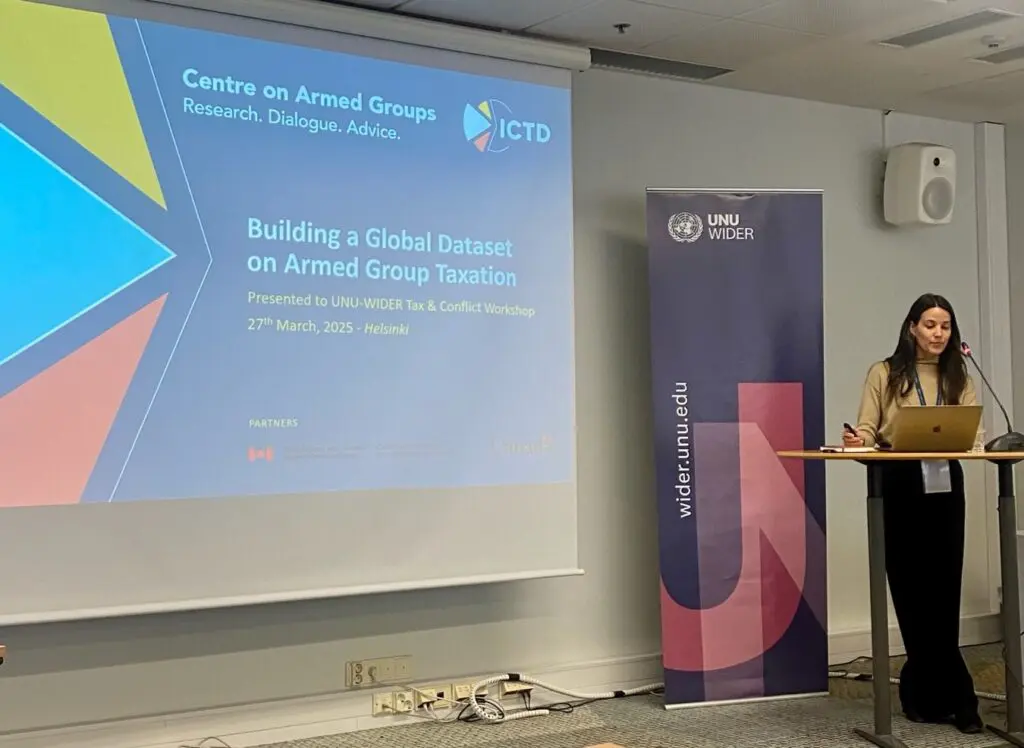
What drives variation in revenue generation and taxing strategies? How does variation in these strategies impact violence against civilians, governance during wartime, and the development of state-like institutions? These are the main questions that guide this project, which plans to portray and identify dynamics of how, when, and why armed groups tax.
This dataset, initially funded by the Social Sciences and Humanities Research Council of Canada and ICTD, results from a collaborative effort between researchers from the University of Toronto, ICTD, the Centre on Armed Groups, and the Institute of Development Studies.
Recent ICTD work on armed group taxation and tax and conflict
- Beyond Greed: Why Armed Groups Tax – This is the first systematic exploration into the motivation of armed group taxation, considering it as a complex phenomenon driven by a confluence of factors beyond revenue motivations. This paper has also been published in the Studies in Conflict & Terrorism journal.
- The Politics of Passage: Roadblocks, Taxation and Control in Conflict – This paper, co-written in collaboration with the Danish Institute for International Studies (DIIS) and the Centre on Armed Groups, exposes the politics of passage idea and explores roadblocks’ logic and their effects on conflict dynamics, challenging traditional views about territorial control and statehood. It serves as an introduction to a joint ICTD-DIIS working paper series, Roadblocks and Revenues.
- Taliban Taxation in Afghanistan explores the Taliban’s pre-2021 system of taxation, how that came to be, and what factors shaped the various forms of Taliban taxation.
- Tax revenue mobilisation in developing countries offers detailed snapshots of tax experiences prior to, during, and after conflict, providing an empirical counterpoint to theories about the role of taxation in war-making and state building.