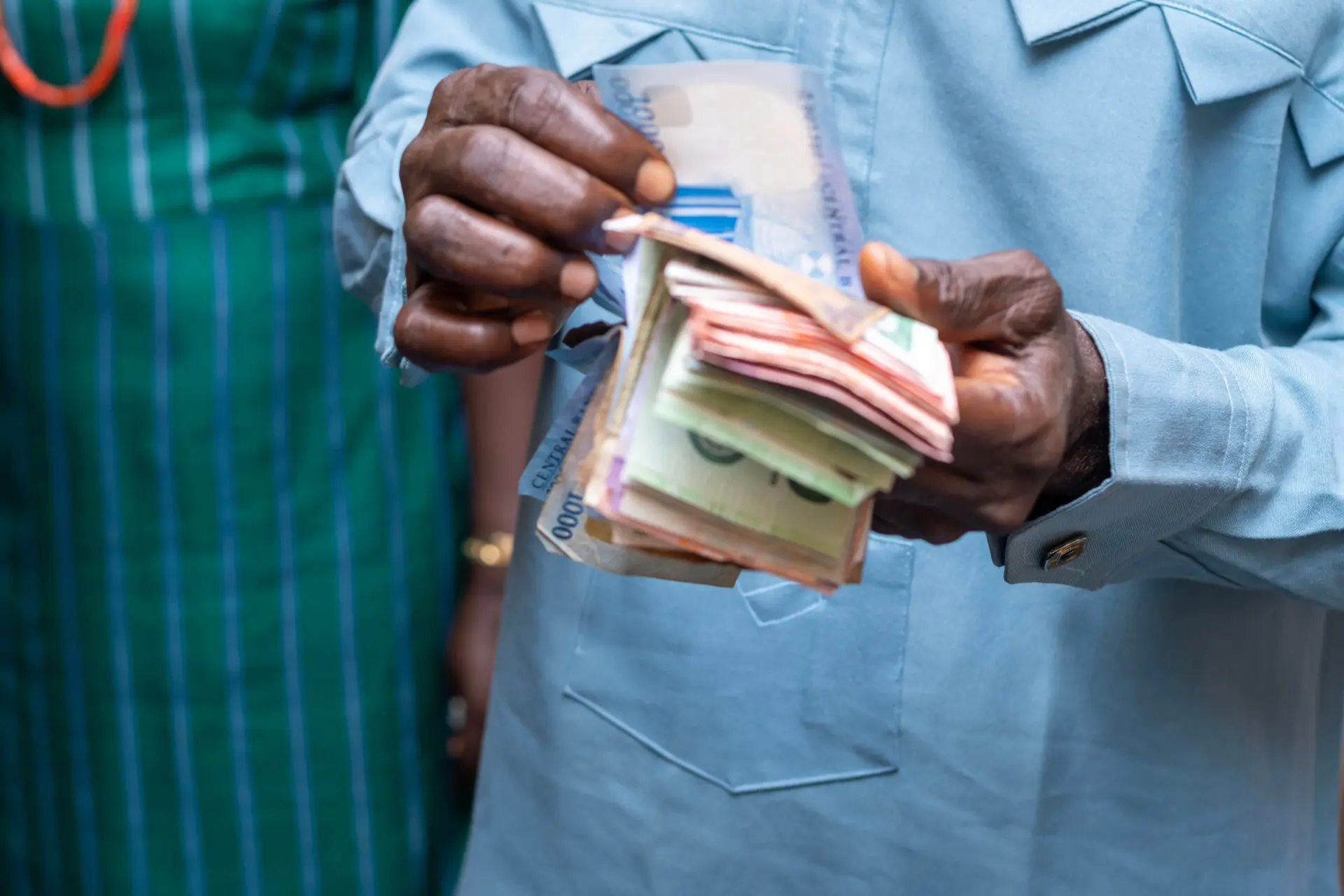
Cashless payments are increasingly central to both economic digitalisation and stronger state capacity. They can deepen financial inclusion, reduce transaction costs, improve business records and connect users to finance and public services. At the same time, the data they generate can help governments improve service delivery, regulation and tax administration.
But greater digitalisation also means greater visibility. If that visibility is associated with higher taxes, aggressive enforcement or opaque use of transaction data, users may revert to cash, split transactions or avoid formal merchant products. This can weaken financial inclusion, trust and the quality of the data governments ultimately rely on.
These trade-offs are particularly relevant where digital-payment ecosystems are still developing. The policy challenge is therefore not simply how to expand digital payments, but how to capture their public value without undermining incentives to use them.
The same applies to payment data. Transaction records can support business services, access to finance, pre-filling, risk analysis and tax compliance, but only where reliable identity, interoperability and secure data exchange are in place. Clear rules on access, purpose, privacy, accountability and redress become even more important as governments explore advanced analytics and AI.
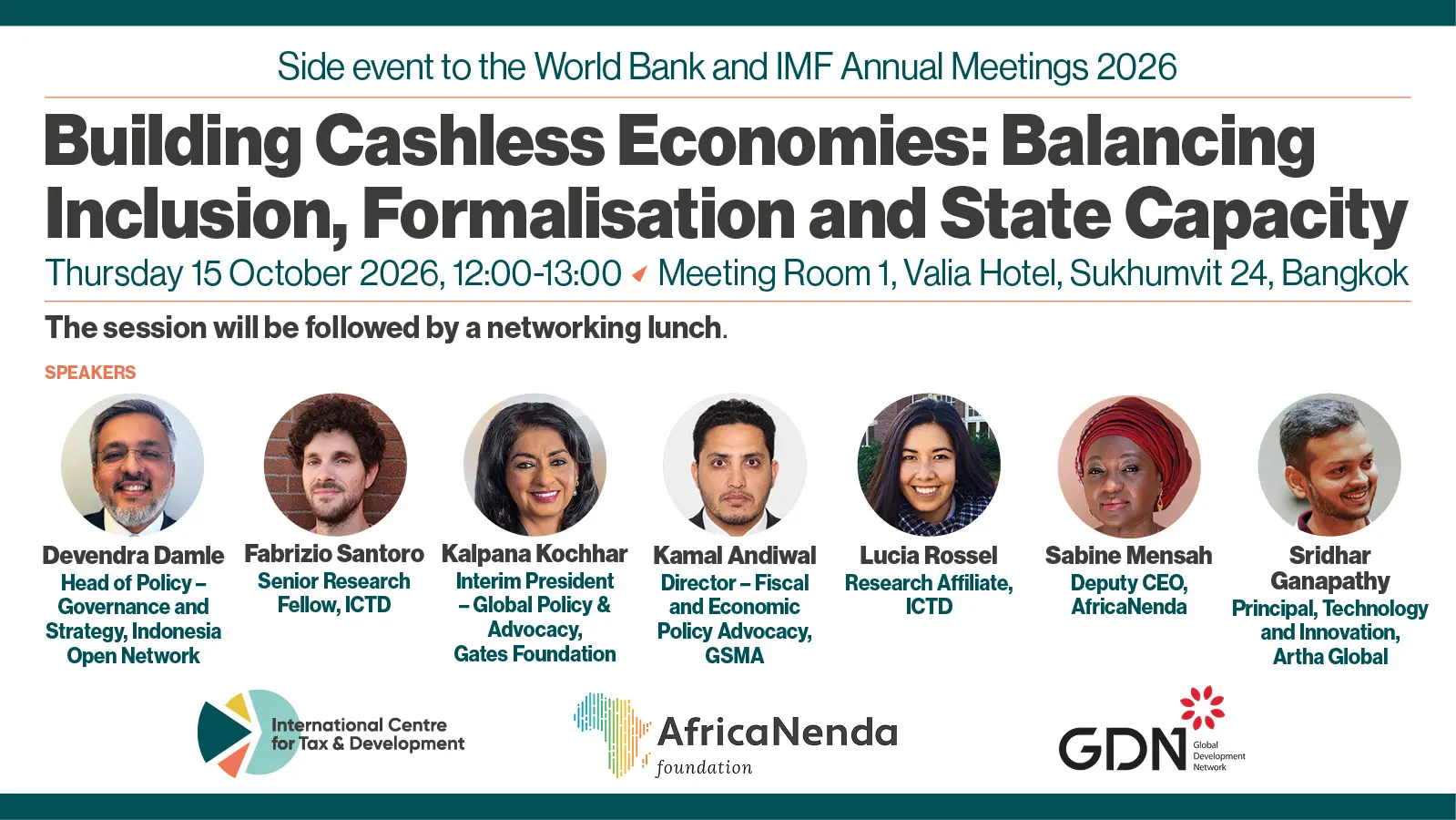
Side event to the World Bank and IMF Annual Meeting 2026
In partnership with AfricaNenda Foundation and the Global Development Network (GDN), ICTD is co-hosting a side-event to the World Bank/IMF Annual Meetings in Bangkok on cashless payments. The panel session will draw on ICTD’s forthcoming Cashless Payments and Tax Playbook, while placing taxation within the broader question of how digital payment infrastructure can support financial inclusion, economic formalisation and state capacity.
The discussion will ask what governments should offer in return for greater visibility. It will also consider the institutional architecture required for responsible data use: clear legal mandates, proportionality, security, transparency and effective mechanisms for correction and redress.
Speakers:
- Devendra Damle, Head of Policy, Governance and Strategy, Indonesia Open Network
- Fabrizio Santoro, Senior Research Fellow, DPI and Tax, ICTD
- Kalpana Kochhar, Interim President for the Global Policy & Advocacy Division, Gates Foundation
- Kamal Andiwal, Director – Fiscal and Economic Policy Advocacy, GSMA
- Lucia Rossel, ICTD Research Associate
- Sabine Mensah, Deputy CEO, AfricaNenda
- Sridhar Ganapathy, Principal, Technology and Innovation, Artha Global
This is an in-person event only, please RSVP in advance to attend.
This event will be followed by a networking lunch then another side-event organised by AfricaNenda Foundation and the Africa Union Commission on Enabling Regulatory Harmonization for Instant Cross-Border Payments in Africa.
Watch the recording
ICTD presence in Bangkok
The Annuals present a unique opportunity to connect with global leaders from governments, industry, international and multilateral organisations and civil society. In what ICTD describes as the tax era of development, domestic resource mobilisation is playing a central role to how lower-income countries finance their development priorities, in the face declining aid flows, rising debt burdens and growing financing needs. Discover our other activities at the Annuals.