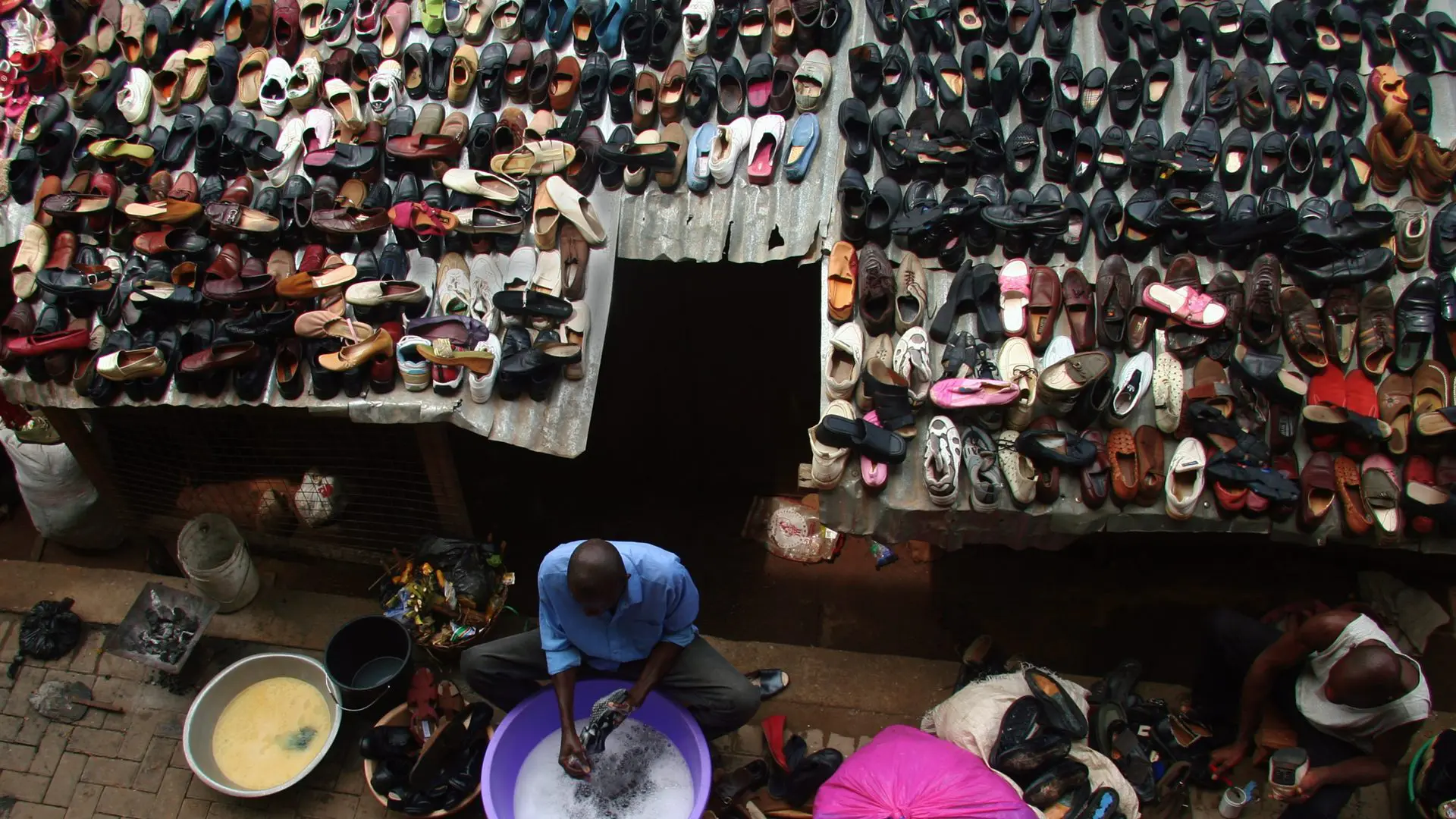
Informality: rethinking the 'untaxed informal sector'
For many years, informal economies were widely seen as undertaxed, and a major untapped source of revenue. That view motivated a set of policy responses, especially simplified tax regimes, mass registration drives, and broader efforts to formalise informal economic activities in the name of revenue mobilisation. More recently, they have been accelerated by the impression that access to new forms of data may make informal activity more legible to tax authorities.
ICTD’s research has challenged that picture. New data on the fiscal contributions of low-income operators has shown that informal workers and businesses often already pay multiple taxes, fees, and levies, alongside a range of informal payments. These burdens are frequently fragmented, opaque, and regressive. ICTD has also led a new wave of evaluations of tax initiatives aimed at informal sectors, finding that many policies aimed at expanding taxation in this space have generated little additional revenue, while being administratively costly and imposing significant costs on those least able to bear them.
The lesson is not that informal actors should remain outside the reach of the state. It is that tax revenue is the wrong driver of formalisation strategies. The stronger case for integrating informal actors into the formal economy lies elsewhere: access to services, credit, legal protection, and more meaningful engagement with public institutions. Taxpaying should flow from there, not be the starting point.
This shift is increasingly visible in policy debate. ICTD’s collaboration with the African Tax Administration Forum (ATAF) has helped push regional discussion towards more evidence-driven and targeted approaches to taxing informal economies, emphasising the limits of current strategies and the need for better targeting, poverty-sensitive design, and taxpayer engagement. The 2025 United Nations Sevilla Commitment, concluded at its first Financing for Development summit in a decade, uses ICTD’s language on taxing informal actors. This emphasises socially-inclusive approaches focused on undeclared income and wealth, while protecting those on lower incomes. ICTD research on simplified tax regimes is likewise shaping policy conversations in countries including Ghana, The Gambia, and Tanzania, seeking to support a generation of more effective and equitable policies in the coming years.
ICTD has helped bring the experiences of workers in informal employment into tax debates that too often overlook them, generating evidence that has challenged assumptions, informed policy discussions, and strengthened the case for more equitable and inclusive fiscal systems.
Laura Alfers International Coordinator, WIEGO

Related experts


Taxing the wealthy: enforcement and the politics of compliance
At the other end of the distribution, ICTD research has revealed large compliance gaps among those with the greatest ability to pay. Tax reform debates in many lower-income countries have long focused on broadening the tax base to the informal sector, with much less attention to whether existing tax obligations are being enforced among high net worth individuals and politically connected elites. Most lower-income countries already have taxes that bear on the wealthy, including taxes on professional income, property, rental income, capital gains, inheritance, and investment income. The challenge is that these taxes are often weakly enforced.
Having evidenced these gaps across several African countries, ICTD’s work has also helped identify what revenue authorities can do about them in practice: identify wealthy taxpayers using existing data, establish dedicated high net worth individuals units, strengthen data sharing with domestic and overseas institutions, simplify compliance, and recognise the political and institutional conditions needed to sustain enforcement.
Targeted enforcement can make rapid progress possible, especially as government data is increasingly digitalised.
In Uganda, the creation of a dedicated high net worth individuals unit raised filing rates among wealthy individuals from 13 per cent to 78 per cent, and generated more than US$5.5 million in revenue gains within its first year. In Sierra Leone, enforcement that targeted high-value properties achieved a 53 percentage point increase in tax compliance, while avoiding public backlash through considered public outreach and communication.
Together, these examples show that revenue authorities can make progress when they focus effort on higher-potential taxpayers and existing tax handles.
The priority, then, is better enforcement of existing tax systems: using available data more effectively, and ensuring that higher-income individuals, professionals, property owners, and businesses with greater revenue potential pay what they owe. Where governments can sustain that effort, it offers one of the clearest routes to making tax systems more progressive and more effective.
Related experts


Gender: broadening how we understand fiscal justice
Earlier debates on tax and gender often focused narrowly on whether tax laws treated men and women differently on paper. If tax systems appeared formally neutral, they were often assumed to be gender-neutral in practice.
ICTD’s research has challenged that assumption. It has shown that women often experience taxation differently because of their economic and social roles, their concentration in lower-income and informal activities, and in the ways they access public services. It has also shown the importance of understanding the full landscape of fiscal burdens, which arise not only through formal taxes, but through informal taxes, user fees, and service-related charges.
Studies of market taxes in Nigeria, Tanzania, and Zimbabwe, and formal and informal taxes in Sierra Leone, have demonstrated the disproportionate burdens borne by women. In Dar es Salaam’s city markets, for example, women traders’ daily toilet fees could amount to as much as 20 per cent of their daily income, showing how service-related charges can become a significant gendered fiscal burden.
This research has contributed to a broader and more grounded understanding of fiscal justice for women. It has made it harder to treat gender as a marginal issue in tax reform, or to assess gender equity only through the wording of tax law. Instead, it has shifted attention towards how tax systems operate in practice, and how their impacts are shaped by wider patterns of work, income, service access, and public spending.
This work has helped put gender more firmly on the tax policy agenda. For example, it informed the World Bank’s conceptual framework for tax reform, a toolkit from Oxfam and Tax Justice Network Africa, and wider debate through UN Women, the Addis Tax Initiative, and the ATAF/African Union High-Level Policy Dialogue, where ICTD’s recommendations were reflected in the Outcome Statement.
Related experts